A roof leak is almost never an emergency for the roof. It's an emergency for the ceiling underneath it. Here's what to do tonight, what can wait until morning, and what actually fixes it.
If you're reading this with a bucket on the floor, start here: a roof leak is almost never an emergency for the roof. It's an emergency for the ceiling, the insulation, and the drywall underneath it. The roof will still be there tomorrow. The water damage is what gets worse by the hour.
So the order of operations matters. Here's what to do tonight, what can wait until morning, and what actually gets it fixed.
Right now: get the water out of the ceiling
The single most useful thing you can do in the first hour has nothing to do with the roof.
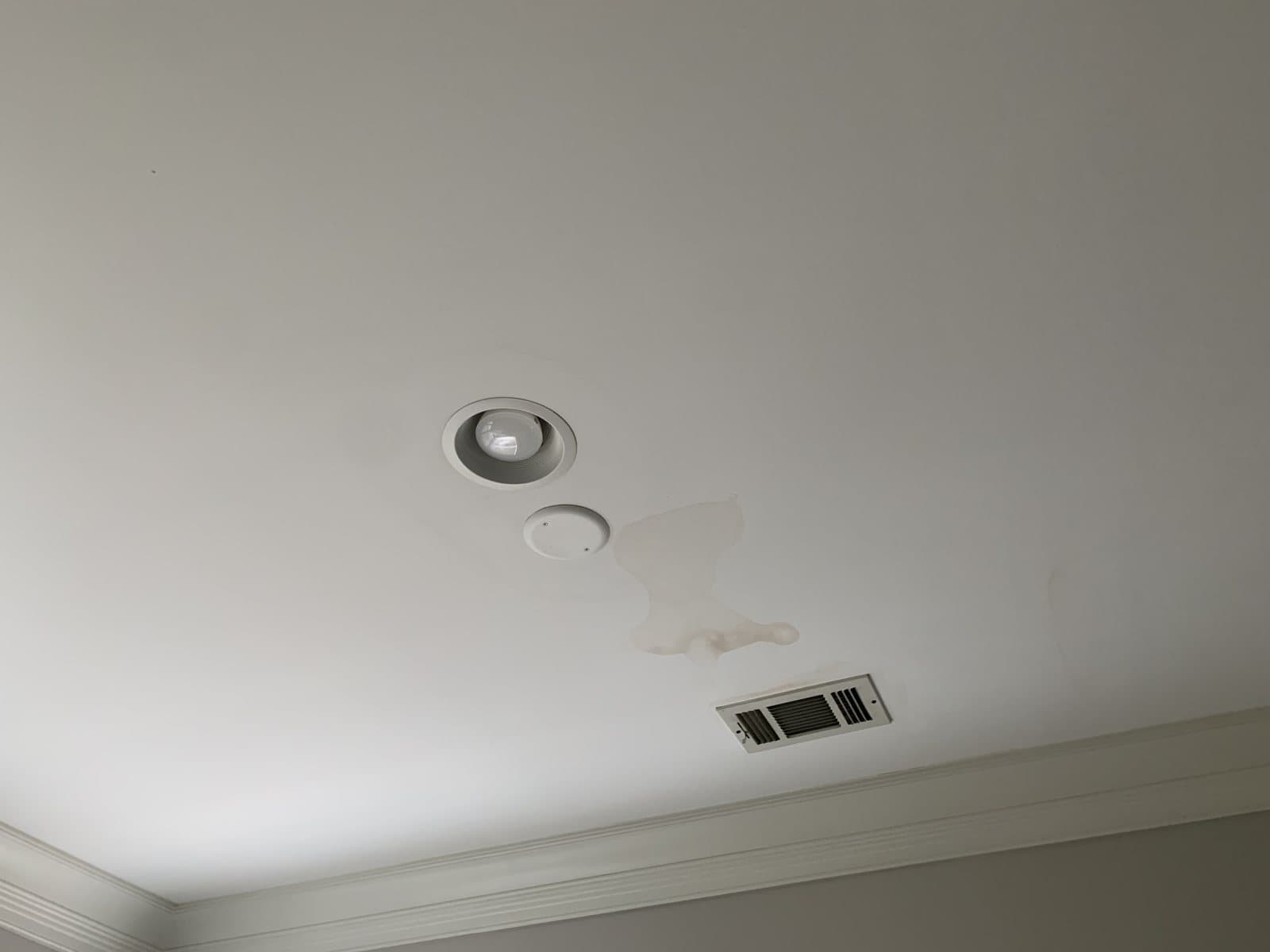
If you have a bulging, sagging, or discolored spot on the ceiling, there is water pooling on top of the drywall. Left alone, that pocket grows until the drywall lets go all at once — usually across a much bigger area than the original leak, and usually onto whatever is underneath it.
Put a bucket down, and then poke a small hole in the center of the bulge with a screwdriver and let it drain into the bucket. It feels wrong to deliberately put a hole in your ceiling. Do it anyway. A one-inch hole you control is a far smaller repair than a three-foot collapse you didn't.
Then:
- Move furniture, electronics, and anything with sentimental value out of the room.
- Pull rugs back so the floor underneath can dry.
- If water is anywhere near a light fixture, ceiling fan, or outlet, turn that circuit off at the breaker. Water and wiring in the same cavity is the one part of this that's genuinely dangerous.
- Take photos before you clean anything up.
A note on the photos
Wide shots of the room, close-ups of the stain, and a photo of the bucket in place. Date-stamped if your phone does that. If this turns into an insurance claim later, these are the pictures that establish when the damage started — and they're impossible to recreate after you've cleaned up.
Do not go on the roof
Not tonight, not in the rain, not "just to look."
A wet asphalt roof is genuinely one of the most dangerous surfaces on a residential property, and the pitch on most North Georgia homes is steeper than it looks from the driveway. Every year roofers who do this for a living get hurt doing exactly this.
There's also a practical reason: you almost certainly can't find the leak from up there anyway. Water enters at one point and travels — along the underside of the decking, down a rafter, across the top of a ceiling joist — before it drops. The wet spot on your ceiling is frequently several feet from the actual hole, and sometimes on the other side of the room. Finding the entry point is a diagnostic job, not a looking-around job.
What a temporary repair actually does
If a roofer comes out tonight, what they'll almost certainly do is tarp it — not fix it.
That's not a brush-off. A proper emergency tarp is a real piece of work: the tarp gets run up over the ridge so water can't get under the top edge, it's secured to battens rather than just weighted down with bricks, and it's sized to cover well past the suspected entry point in every direction. Done right, it buys you weeks of dryness. Done badly, it channels water somewhere new.
What it doesn't do is diagnose anything. A tarp in the rain is triage. The actual repair happens in daylight, on a dry roof, after somebody has worked out where the water is really getting in.
For reference, Angi's 2026 cost data for the Suwanee, GA area puts professional roof tarping at an average of $450, ranging from $150 to $3,300 depending on the size of the damaged area and whether it's an emergency call. That's third-party data, not a Bailey quote; we price it per job and tell you before we start.
The next morning: find out what's actually wrong
Roof leaks in North Georgia are boringly predictable. The overwhelming majority come from one of a handful of places, and almost none of them are "the shingles wore out":
- Pipe boots. The rubber collar around a plumbing vent stack cracks from UV exposure, usually somewhere between years 8 and 15. This is the single most common roof leak on a Gwinnett-area home, and it's a cheap fix.
- Flashing. Where the roof meets a chimney, a wall, a dormer, or a skylight. Flashing fails at the joints and at the sealant long before the metal itself goes.
- Valleys. Where two roof planes meet, water volume concentrates. Debris collects, water backs up, and it finds the seam.
- Nail pops. Fasteners back out over time and the hole they leave is a direct path into the decking.
- Clogged gutters. Water backs up under the shingle edge at the eave and rots the fascia and decking from the outside in. If your gutters haven't been cleared in a while, start looking here.
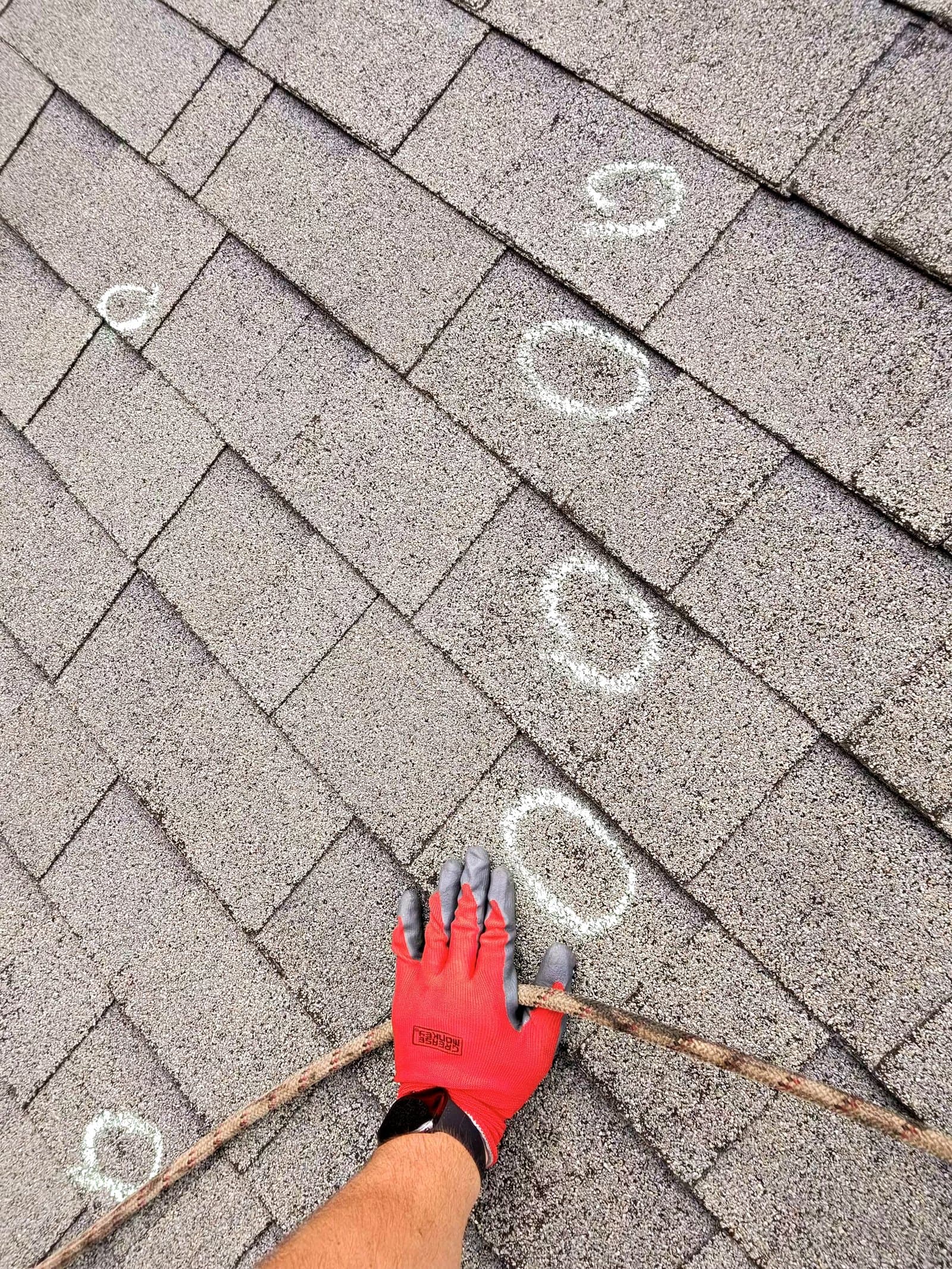
- Storm damage. A lifted or creased shingle from high wind, or a hail bruise that's knocked the granules off and exposed the mat. This one matters most, because it's the category insurance is most likely to pay for.
That last point is why the inspection is worth doing properly even if the leak seems small. The difference between "your pipe boot is 14 years old" and "a storm did this in June" is often the difference between a few hundred dollars out of pocket and a covered claim.
Helpful next steps
What it costs to fix
A repair, not a replacement. Angi's 2026 roof leak repair data for the Suwanee, GA area puts the normal range at $700 to $3,000, with an average of $900 — and a low end around $400 for something simple. The high end climbs a long way when structural repairs are involved.
Notice that the average sits near the bottom of the range. That's the shape of this kind of work: most leaks are a straightforward fix, and a minority are expensive. Which one you have is the thing an inspection tells you.
Treat that as a sanity check, not a quote. What actually moves the number on a North Georgia home is: how far the water travelled before it showed up, whether the roof decking underneath is still sound or has gone soft, roof pitch and access, and whether the fix is one boot or a whole valley rebuilt.
The honest version: nobody can price your leak over the phone, and you should be a little suspicious of anyone who tries. What a good roofer can tell you on the phone is roughly what category you're in.
When a leak becomes a water damage problem
This is the part homeowners underestimate, and it's the reason not to sit on it.
The EPA's guidance is blunt: wet materials need to be dried within 24 to 48 hours, because after that, mold growth becomes likely. Wet insulation doesn't drain and doesn't dry on its own — it sits in the ceiling cavity holding moisture against the drywall and the framing. A leak you "keep an eye on" for three weeks is no longer a roofing job. It's a roofing job plus drywall plus insulation plus, potentially, remediation.
So: bucket tonight, inspection this week. Not this month.
Sources and further reading
Should you file a claim?
Get the inspection first, then decide. Filing blind, before anyone has told you what's actually wrong, puts you in the position of arguing about damage you can't describe.
Broadly, homeowners policies in Georgia tend to cover sudden, accidental damage from a specific event — wind, hail, a tree limb — and tend not to cover gradual wear, age, or deferred maintenance. A cracked 14-year-old pipe boot is usually a maintenance item. A shingle creased by a June windstorm usually isn't. Which one you have is a factual question an inspection answers.
This is general information, not legal or insurance advice. Every policy is different — read yours, and confirm the specifics with your insurer or agent.
More on insurance
Why call us
We're at 218 S Hill St in downtown Buford, so when a Gwinnett roof starts leaking you are calling a local shop rather than being routed through a call center. Our office hours are Monday to Friday, 9 to 5, and we answer storm and home emergencies around the clock.
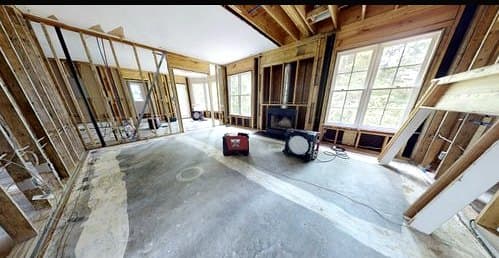
The part that matters for a leak specifically: we do both halves of the job. Most roofers stop at the shingles and hand you a phone number for whoever fixes the ceiling. We fix the roof and rebuild the rooms under it — extraction, structural dry-out, drywall, paint, the lot — and if it's an insurance claim, we meet your adjuster on site and document it.
Inspections are free, you keep the photos, and there's no pressure to do anything with them.
Bailey Roofing & Restoration offers free, no-pressure inspections across Buford and North Georgia — with photo documentation you can keep whether or not you file a claim.
Want a straight answer about your roof?
Book a free, no-pressure inspection. You get photos and an honest assessment — whether or not you do anything about it today.
Frequently asked
My ceiling is bulging with water. Should I puncture it?
Yes. Put a bucket underneath and make a small hole in the center of the bulge with a screwdriver so it drains in a controlled way. A pocket of trapped water will eventually bring down a much larger section of drywall on its own, and it will do it without warning.
Can I go up and look at the roof myself?
No. A wet roof is dangerous, and the leak usually isn't where you'd think to look anyway — water travels along the decking and framing before it drops, so the wet spot on your ceiling can be several feet from the actual entry point. Diagnosing it is an inspection job.
How much does it cost to fix a roof leak?
Angi's 2026 data for the Suwanee, GA area puts the normal range at $700 to $3,000, averaging $900, with simple repairs starting around $400. Your actual cost depends on the cause, whether the decking underneath has gone soft, roof pitch and access, and how far the water travelled. We quote it up front after an inspection.
What's the most common cause of a roof leak in Buford?
Cracked pipe boots — the rubber collar around a plumbing vent — are the most common single cause on homes in this area, typically failing somewhere between years 8 and 15. Failed flashing around chimneys and skylights, valley debris, nail pops, and clogged gutters account for most of the rest.
How long can I leave a roof leak before it becomes a bigger problem?
Not long. The EPA advises drying wet materials within 24 to 48 hours to prevent mold growth. Wet insulation holds moisture against the drywall and framing and won't dry on its own, so a leak left for weeks typically turns a roof repair into a roof repair plus interior restoration.
Will my insurance cover a roof leak?
It depends on the cause. Policies generally cover sudden damage from a specific event like wind or hail, and generally exclude gradual wear and age. Get an inspection before you file so you know which one you have. Check your own policy for the specifics.
Do you do emergency tarping at night?
Yes — we handle storm and home emergencies 24/7. A tarp is a temporary measure to stop further damage; the diagnosis and actual repair happen in daylight on a dry roof.