Whether your policy pays for a patch, a slope, or a whole new roof comes down to the cause, your coverage type, and how well the damage is documented. How it works for North Georgia homeowners.
Every homeowner asks it after a storm. Will insurance cover this?
For most people here the honest answer is: often yes, if the cause is right and the damage is documented. Whether your policy pays for a patch, one slope, or a whole new roof comes down to three things — what caused the damage, the kind of policy you carry, and how well the loss gets proven.
The short version
- Sudden, accidental damage — hail, wind, a fallen tree, fire — is generally covered. A roof that wore out is not.
- Your policy sets the filing deadline, not Georgia law. Read yours, and report in days rather than months.
- RCV pays what a new roof costs today, minus your deductible. ACV pays the depreciated value of the old one, which can leave a gap.
- Repair or full replacement is decided by the adjuster's scope of loss, which is why documenting the damage before you file matters more than anything else.
Covered causes vs. wear and tear
A standard homeowners policy is built to pay for sudden, accidental damage. Not for a roof that wore out.
Hail, high wind, a fallen tree or limb, fire — those are covered on most standard policies. Damage from age, gradual deterioration, or maintenance that never happened generally is not. Shingles curling in the Georgia sun, with granules washing into the gutters, is maintenance. That one is on you.
This is why the cause matters so much. A storm can push an older roof over the edge, and a thorough inspection documents the storm damage specifically instead of letting the whole thing get written off as "just an old roof." A rushed adjuster working through a long list will not go looking for it.
Not sure a storm even hit your address?
Our storm tracker maps verified NOAA hail and wind reports across North Georgia and is refreshed weekly. You can search your own street before you pick up the phone.
What counts as roof damage
Roof claims are not only about shingles. Depending on the storm and your policy, a covered loss can include:
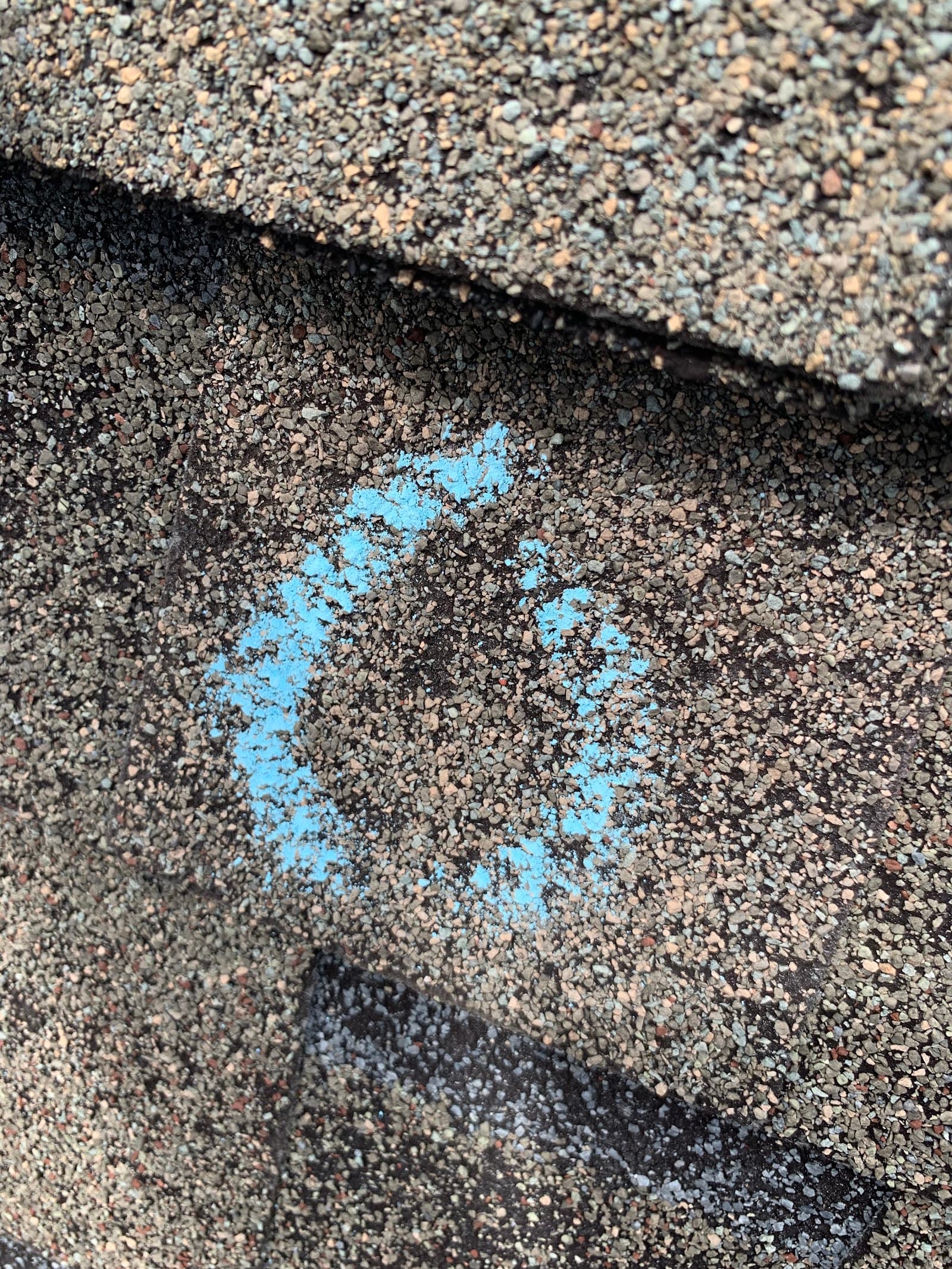
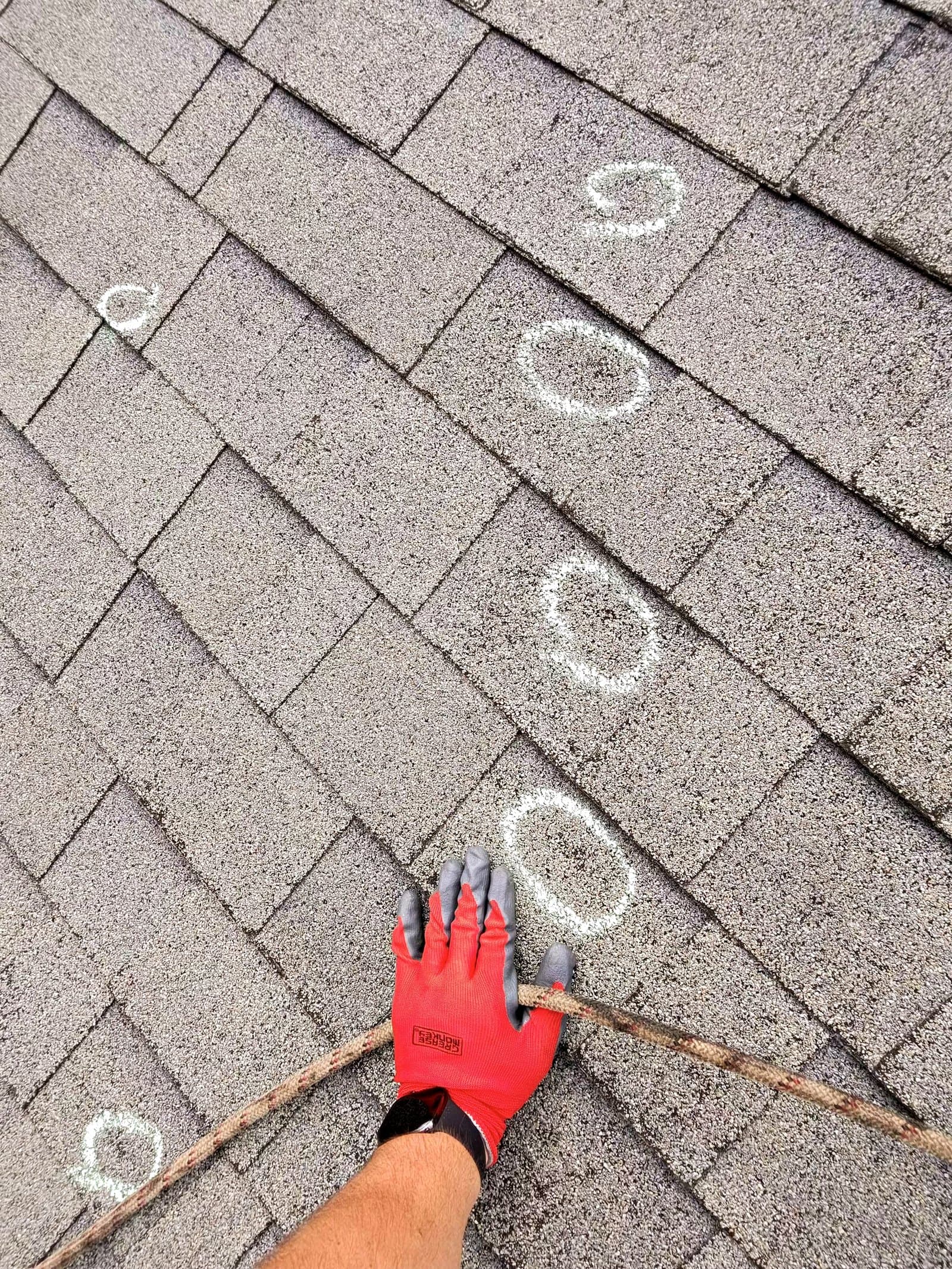
- Hail impacts that bruise the shingle mat and knock the protective granules off.
- Wind that creases, lifts, or tears shingles away, or damages flashing and ridge caps.
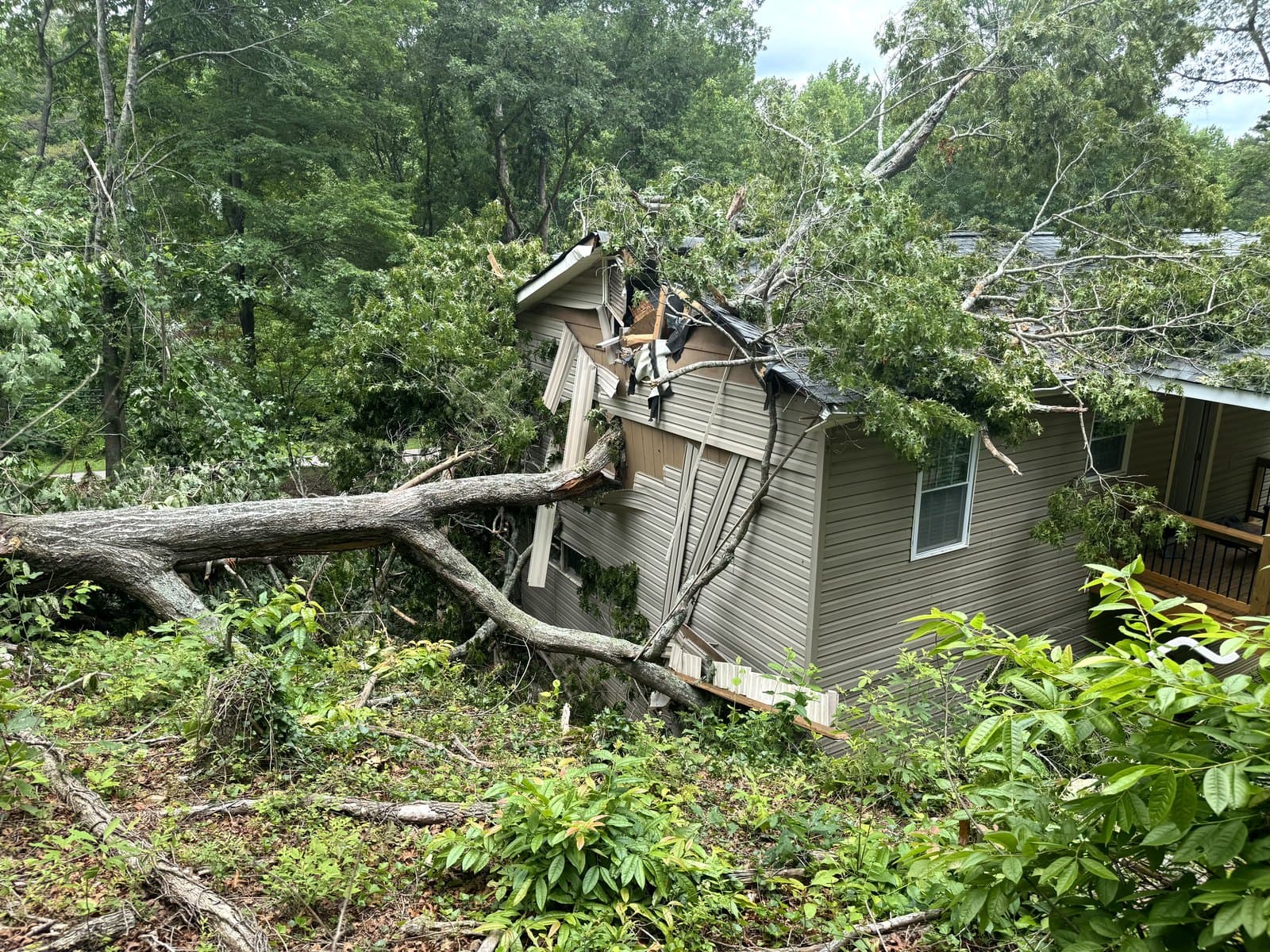
- A fallen tree or limb that punctures the deck.
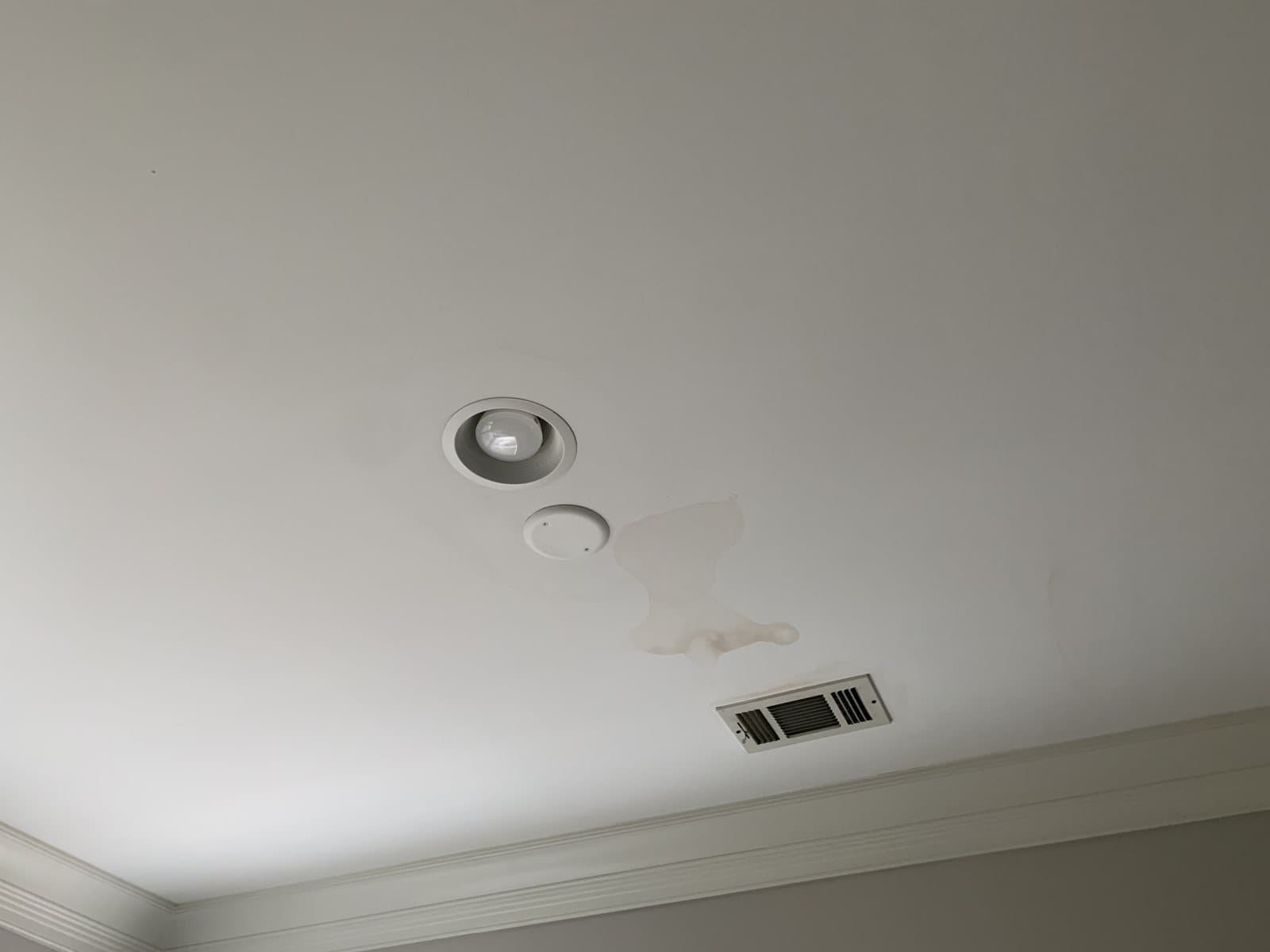
- Water that got in through that damage and reached ceilings, insulation, and the rooms below.
That last one matters here. When a roof fails, the damage rarely stops at the roofline. Many policies cover the resulting interior water damage as part of the same loss, which is one more reason to document everything from the start.
A repair or a full replacement — what decides it
An approved claim does not automatically mean a new roof. The insurer pays to put the damaged part back, and how much of the roof that turns out to be is written into the adjuster's scope of loss.
Four things move that line:
- How much of the roof is actually damaged. Hail and wind rarely land in one tidy spot, and damage counted on several slopes is a different conversation from damage counted on one.
- Whether the damaged sections can be taken off on their own without disturbing sound roofing around them. That is a scope question, and it gets argued case by case.
- What the scope leaves out. Flashing, ventilation, ridge caps, and code-required work are the line items most often missing, and they are also the ones that move a claim from a partial repair toward a full replacement.
- Your coverage type. RCV or ACV does not decide repair versus replacement, but it decides what you are out of pocket either way.
This is why we walk the roof with the adjuster. The scope gets written up on the roof, once, and everything that gets paid comes out of it.
ACV vs. RCV — the biggest factor in what you pay
Two policy types change your out-of-pocket more than anything else.
- Replacement Cost Value (RCV). The insurer pays what it costs to replace the damaged roof today, minus your deductible. Stronger coverage, and what most modern policies carry.
- Actual Cash Value (ACV). The insurer pays the depreciated value of the old roof, factoring in age and wear. That can leave a bigger gap you cover yourself.
Read your declarations page so you know which one you have before a storm, not after.
Deductibles, and the wind and hail wrinkle
Every claim is subject to your deductible. In a hail-prone area, many policies now carry a separate wind and hail deductible, sometimes a percentage of the home's insured value rather than a flat dollar amount.
That can make your share of a storm claim different from what you would expect. Worth confirming on your policy now.
Why claims get denied or underpaid
- 1The damage was ruled wear and tear rather than a covered storm event.
- 2The loss was not documented well enough to tie it to a specific storm.
- 3It was reported too late, past the policy's deadline or after a later storm muddied the cause.
- 4The adjuster's scope missed slopes, flashing, or code-required items, and nobody caught it.
Documentation is everything.
The biggest thing separating an approved claim from a denied one is proof. Dated photos, measurements, a professional inspection. Document first, file second.
How long do you have to file in Georgia?
Your policy, not Georgia law, sets the deadline.
That is worth saying twice, because a lot of people have been told otherwise. There is no state filing deadline for a roof claim against your own insurer. Many Georgia policies require notice of a loss promptly, or "as soon as reasonably practicable," and some suit-against-us clauses limit the time to as little as one year from the date of loss. Those are contract terms. They vary by carrier, and yours is the only one that matters.
There is a second clock nobody writes into a policy. The longer you wait, the harder it gets to prove the damage came from one specific storm and not from age or from the storm after it. If you think your roof took a hit, get it looked at and photographed now, even if you are not ready to file.
How to give your roof claim the best chance
- 1Get an inspection with photos before you call your insurer, so you know whether you have real, claimable damage.
- 2Report promptly and keep records of the storm date and any emergency repairs.
- 3Have your roofer meet the adjuster on the roof so nothing gets missed.
- 4Read the scope for missing items. Flashing, ventilation, and code upgrades are the ones most often left out.
- 5Keep the receipts for temporary fixes like tarping. Those are usually reimbursable.
Keep going
The bottom line
If a covered event like hail, wind, a fallen tree, or fire damaged your roof, and you can document it, there is a real chance your policy pays for the work — a repair or a full replacement, depending on what the damage turns out to be. RCV coverage makes that go further.
If the damage is just age, that is a separate conversation, and still worth having. Either way the first step is the same: an honest inspection that tells you which situation you are in.
Bailey Roofing & Restoration offers free, no-pressure inspections across Buford and North Georgia — with photo documentation you can keep whether or not you file a claim. We can meet your adjuster on-site and handle the claim from first call to final payment.
This is general information, not legal or insurance advice. Every policy is different. Read yours and confirm with your insurer.
Want a straight answer about your roof?
Book a free, no-pressure inspection. You get photos and an honest assessment — whether or not you do anything about it today.
Frequently asked
Does homeowners insurance cover roof damage in Georgia?
Usually yes, when the damage came from a covered peril like hail, wind, a fallen tree, or fire, and it is documented. Damage from age, wear, or lack of maintenance generally is not.
Does homeowners insurance cover a full roof replacement in Georgia?
It can. A replacement gets paid when a covered peril damaged enough of the roof that the adjuster's scope of loss calls for replacing it rather than repairing it, and the damage is documented. A roof that failed from age or missed maintenance generally is not covered either way.
Does insurance cover the interior water damage from a leaking roof?
Often yes, when the leak came from a covered storm event. Many policies treat the resulting interior damage as part of the same loss.
What is the difference between ACV and RCV coverage?
RCV pays to replace the roof at today's cost minus your deductible. ACV pays the depreciated value of the old roof, which can leave a bigger out-of-pocket gap.
How long do I have to file a roof damage claim in Georgia?
Your policy, not Georgia law, sets the deadline. Many policies require prompt notice and some limit the time to file suit to as little as one year from the date of loss. Report within days and read your policy.
Will filing a roof claim raise my premium?
A single weather-related claim usually has less impact than an at-fault claim, but it varies by carrier. An inspection first tells you whether you even have a claim worth filing.