The most important roof work happens in the two days after a storm — long before any talk of a replacement. Here's exactly what to do, step by step, from a local Buford crew.
When a line of storms comes through Buford, the most important work happens in the first two days — long before anybody talks to you about a replacement.
What you do now protects the house and makes any future claim far stronger. Here is the plan, in order.
First, stay safe. The roof can wait.
Before you think about the roof, make sure everybody is okay. Stay away from downed power lines, standing water, and anything the wind left leaning.
Do not climb up on a wet or storm-damaged roof to check things out. That is how a bad night turns into an emergency room visit. Roof damage can be assessed from the ground, and properly by somebody trained, later.
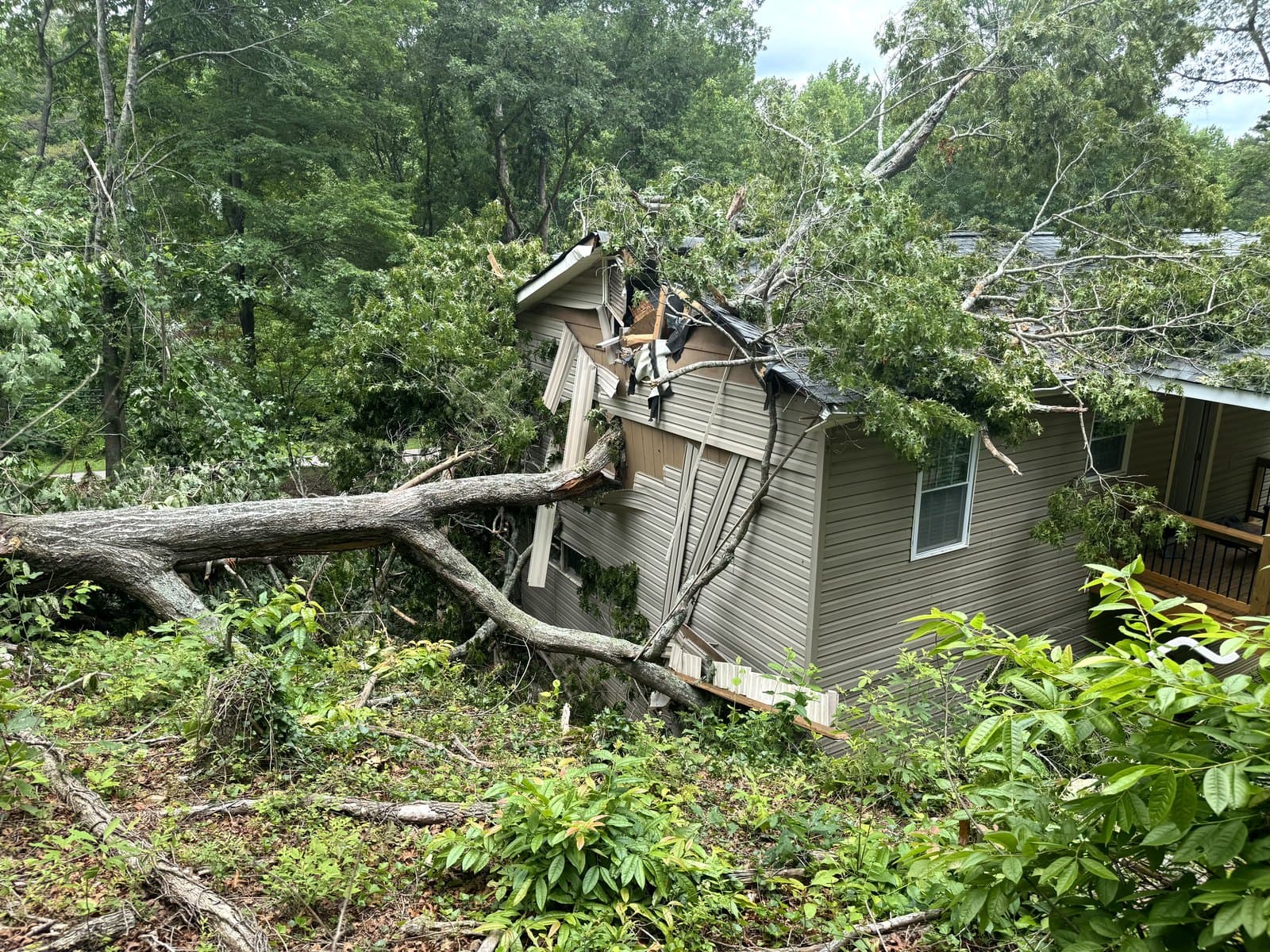
If a tree or a large limb has come through the roof, or a ceiling is sagging and dripping, treat that as an emergency and get help first.
Hours 0 to 6: contain what is coming in
If water is actively getting in, the goal for the next few hours is simple. Keep it from spreading.
Move furniture and anything you care about out of the way. Buckets under the drips. Pull rugs back so the floor can dry. If you can safely do it from inside, use plastic sheeting to steer water toward a container.
Anything that involves getting on the roof is a call to a professional, not a job for a ladder in the rain.
Keep every receipt.
Emergency measures — a tarp, buckets, a box fan to dry a room — are usually reimbursable under a homeowners policy. Photograph the damage before you cover anything up, then keep the receipts.
The first day: document everything
Documentation is the most valuable thing you can create right now, because it ties the damage to one storm on one date.
Walk the property from the ground and record:
- The date and rough time of the storm. Write it down while it is fresh.
- Wide photos and video of the house from several angles, plus close-ups of anything obvious.
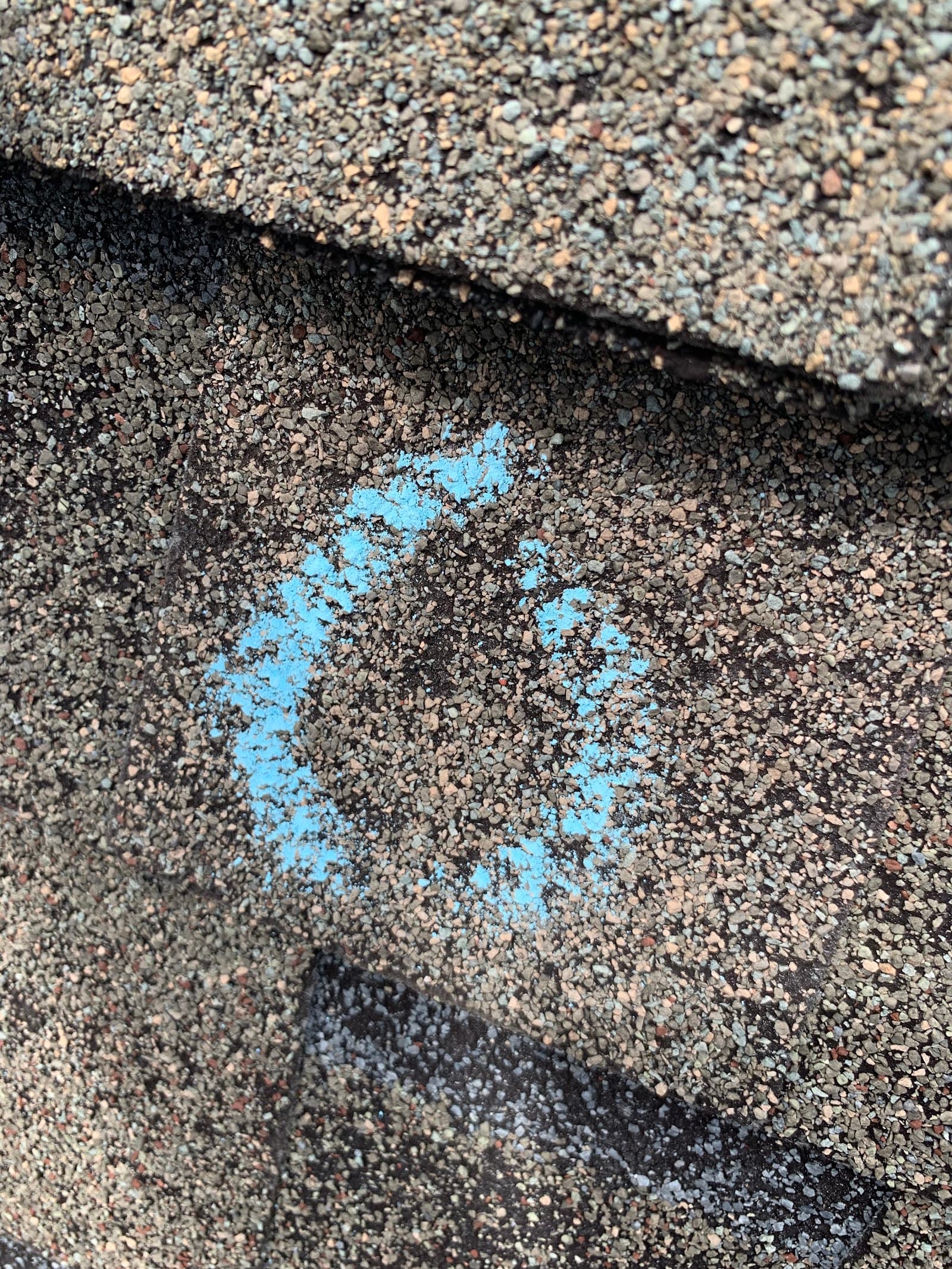
- Ground-level hail clues: dented gutters and downspouts, dinged vents, torn screens, marks on the AC fins, the mailbox, a grill lid.
- Shingles, granules, or debris in the yard and the driveway.
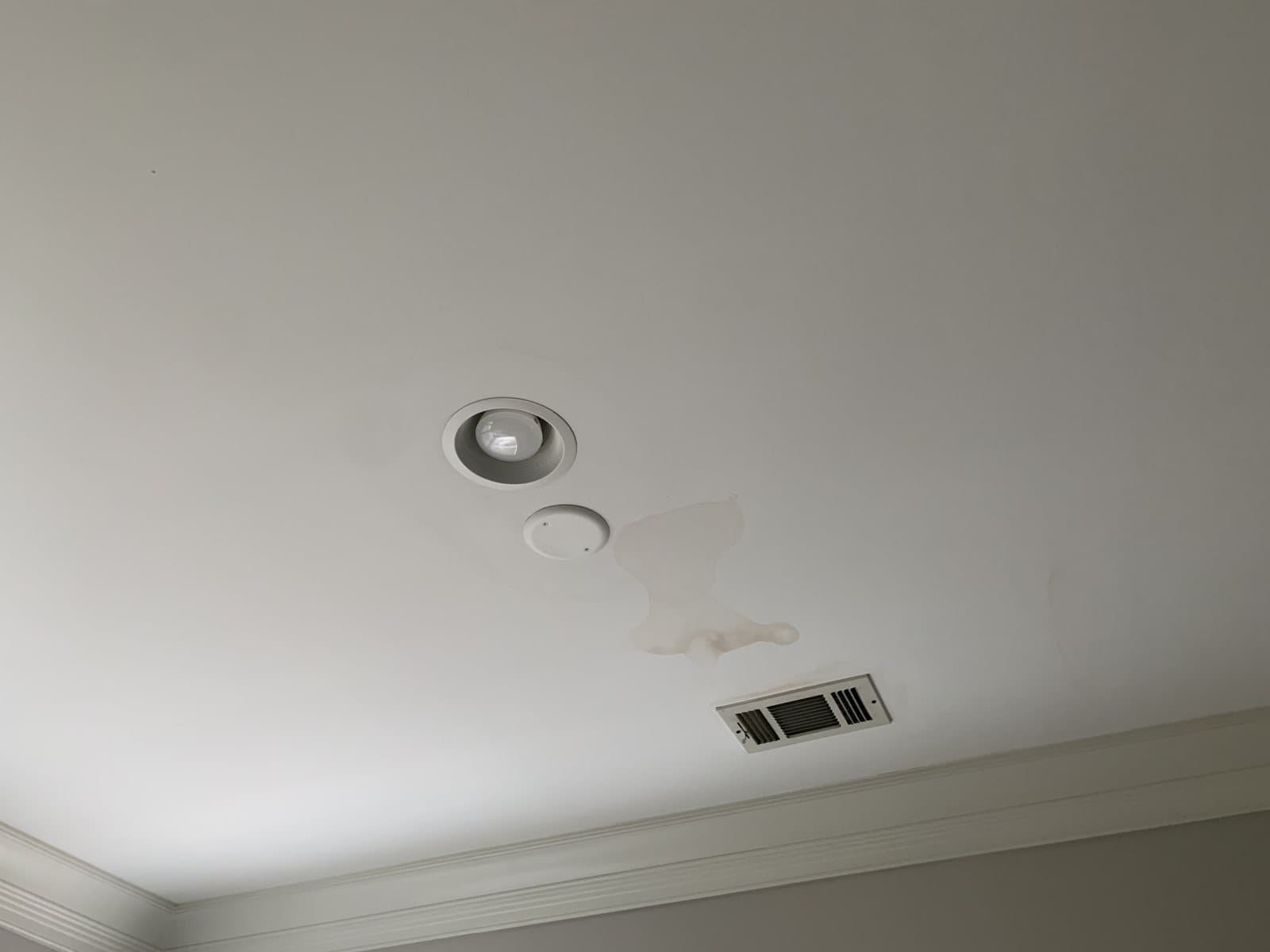
- Inside: fresh ceiling stains, damp drywall, water around windows.
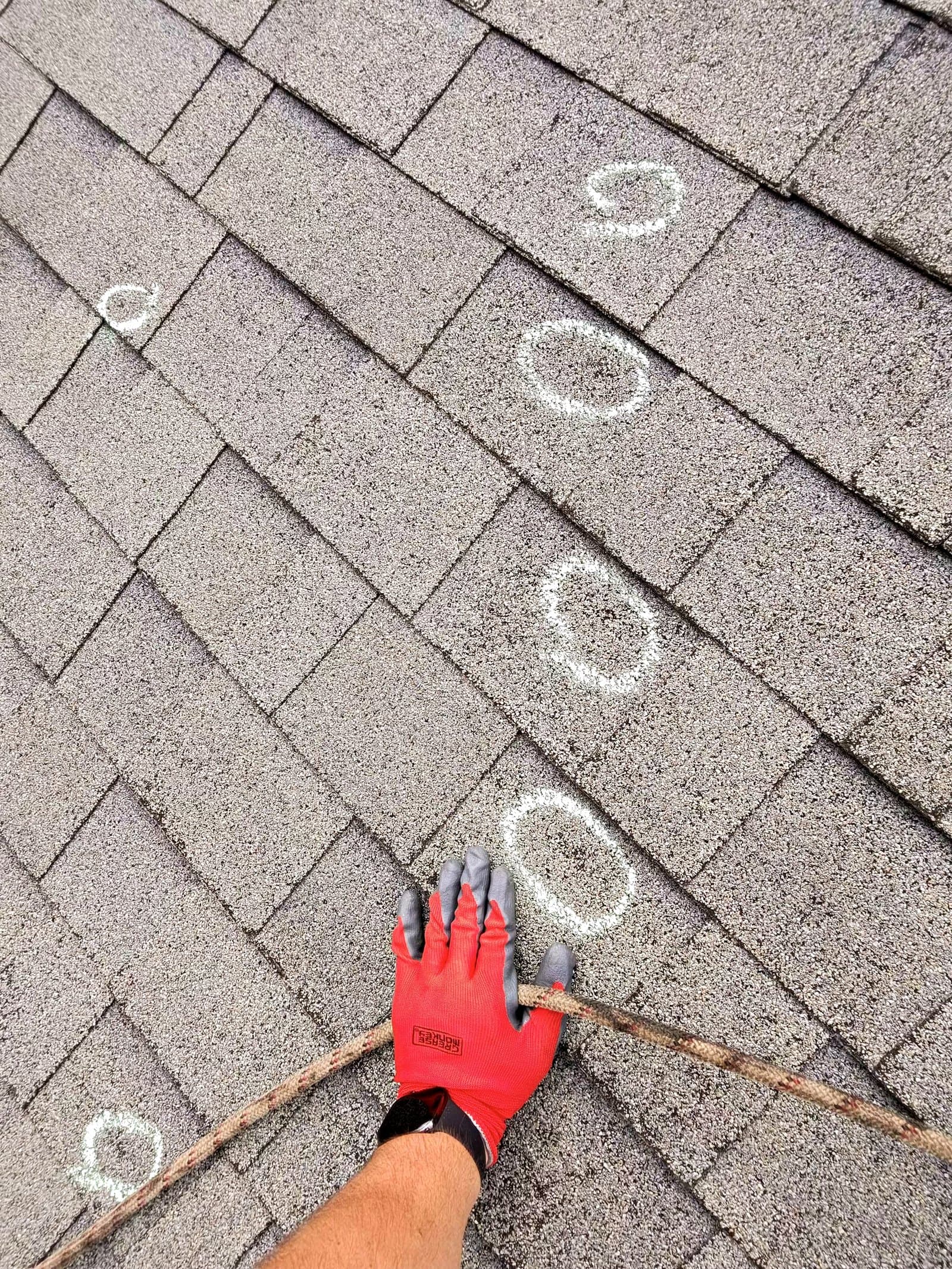
You do not need to diagnose the roof yourself. Hail bruising and wind creasing are genuinely hard to see from the ground and easy to mistake for ordinary wear. Your job today is to capture the "before" so nothing later gets blamed on a different storm or on age.
Hours 24 to 48: get a professional inspection
Once the weather has cleared and it is safe, get the roof properly inspected with photos.
Somebody local can get up there safely, find storm damage an untrained eye would walk past, and give you a straight read on whether this is a repair, a replacement, or nothing urgent at all. Having that in hand before you call your insurer means you know what you actually have instead of filing blind.
Be careful who knocks
After a big storm, storm chasers work Gwinnett door to door offering a free roof and pushing you to sign right there.
Be careful. A reputable local company does not need a signature at the door before anybody has been on the roof. Get an independent inspection and a written scope, and check that whoever you hire is genuinely local and still reachable after the job is done.
When to call your insurer
Once you have documented the damage and had it inspected, you are in a strong position to decide whether to file.
Your policy sets that deadline, not Georgia law. Most policies require notice "promptly" or "as soon as reasonably practicable," and some limit the time to file suit to as little as one year from the date of loss. The practical version: report within days, not months, and read your own policy.
Helpful next steps
We are local, and we answer the phone
Bailey Roofing & Restoration is based at 218 S Hill St in downtown Buford. When a storm hits Gwinnett, you are calling a local shop, not a call center.
Free, no-pressure inspections with photo documentation you keep whether or not you file a claim. And because we handle the roof and the rooms underneath it, one team can take a storm-damaged house all the way through to finished. If a storm just came through, call us at (770) 381-8081.
This is general information, not legal or insurance advice. Every policy is different. Read yours and confirm with your insurer.
Want a straight answer about your roof?
Book a free, no-pressure inspection. You get photos and an honest assessment — whether or not you do anything about it today.
Frequently asked
What should I do first after a storm damages my roof in Buford?
Make sure everyone is safe and stay off the roof. Contain active leaks from inside, photograph the damage, note the storm date, then get a professional inspection before you call your insurer.
Should I get on my roof to check for hail damage?
No. A wet or storm-damaged roof is dangerous, and hail bruising is hard to identify without training. Look from the ground and let a professional handle the roof surface.
How long do I have to file a storm claim in Georgia?
Your policy's deadline governs, not state law, and it is usually short. Many policies require prompt notice and some limit the time to file suit to as little as one year. Report within days and read your policy.
Someone knocked on my door offering a free roof. Should I sign?
Be careful. A reputable local company will not pressure you to sign at the door before a proper inspection. Get an independent inspection and a written scope first.