Hail damage is deceptive — a roof can look fine from the driveway and still be failing. What real hail damage looks like and what to do after a storm.
Hail is sneaky. A storm goes through, the roof looks fine from the driveway, and the impacts have still knocked granules loose and bruised the shingle mat underneath.
That damage shortens the life of the roof and opens the door to leaks later. Here is how to tell, and what to do about it.
What hail damage actually looks like
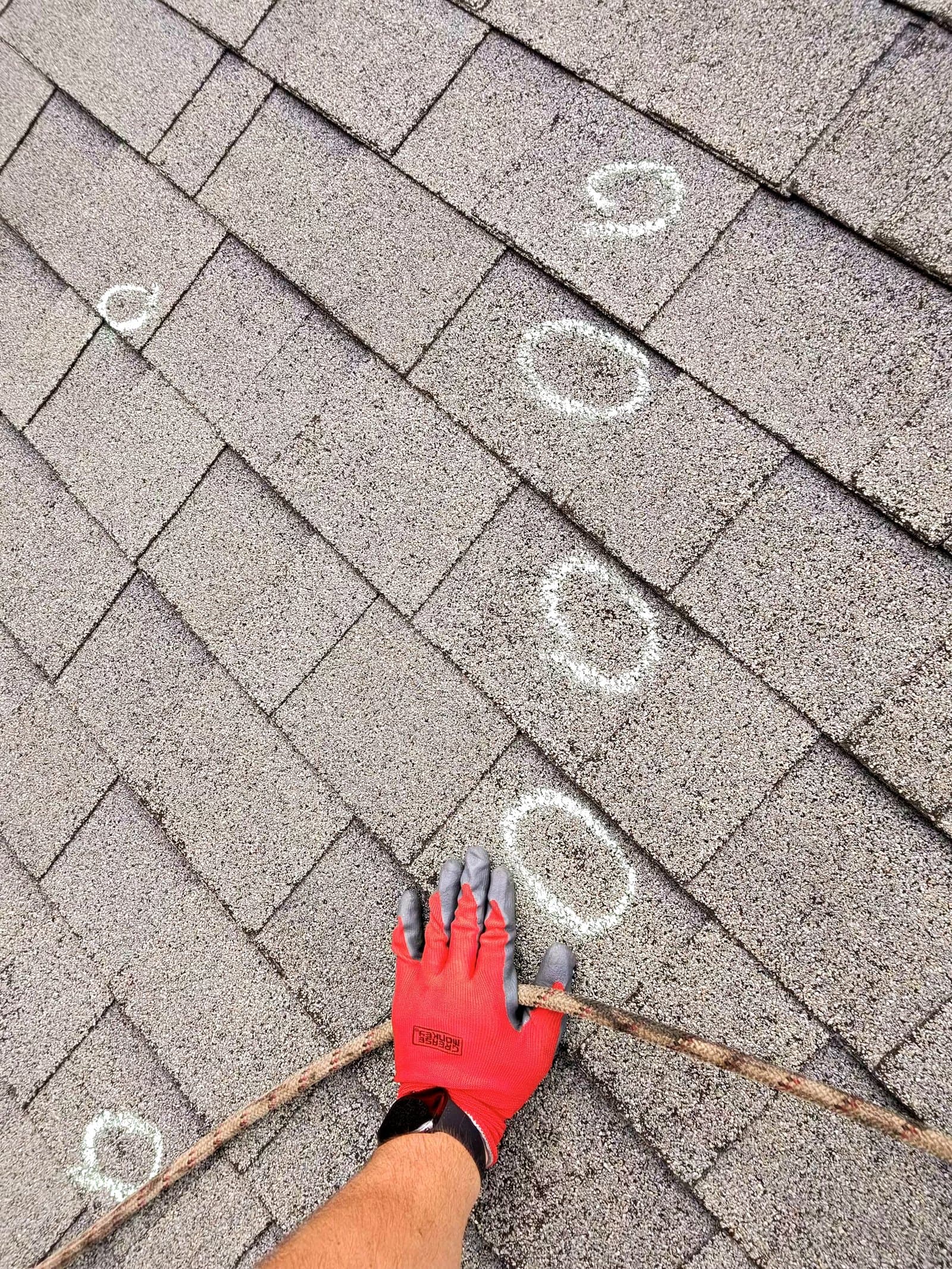
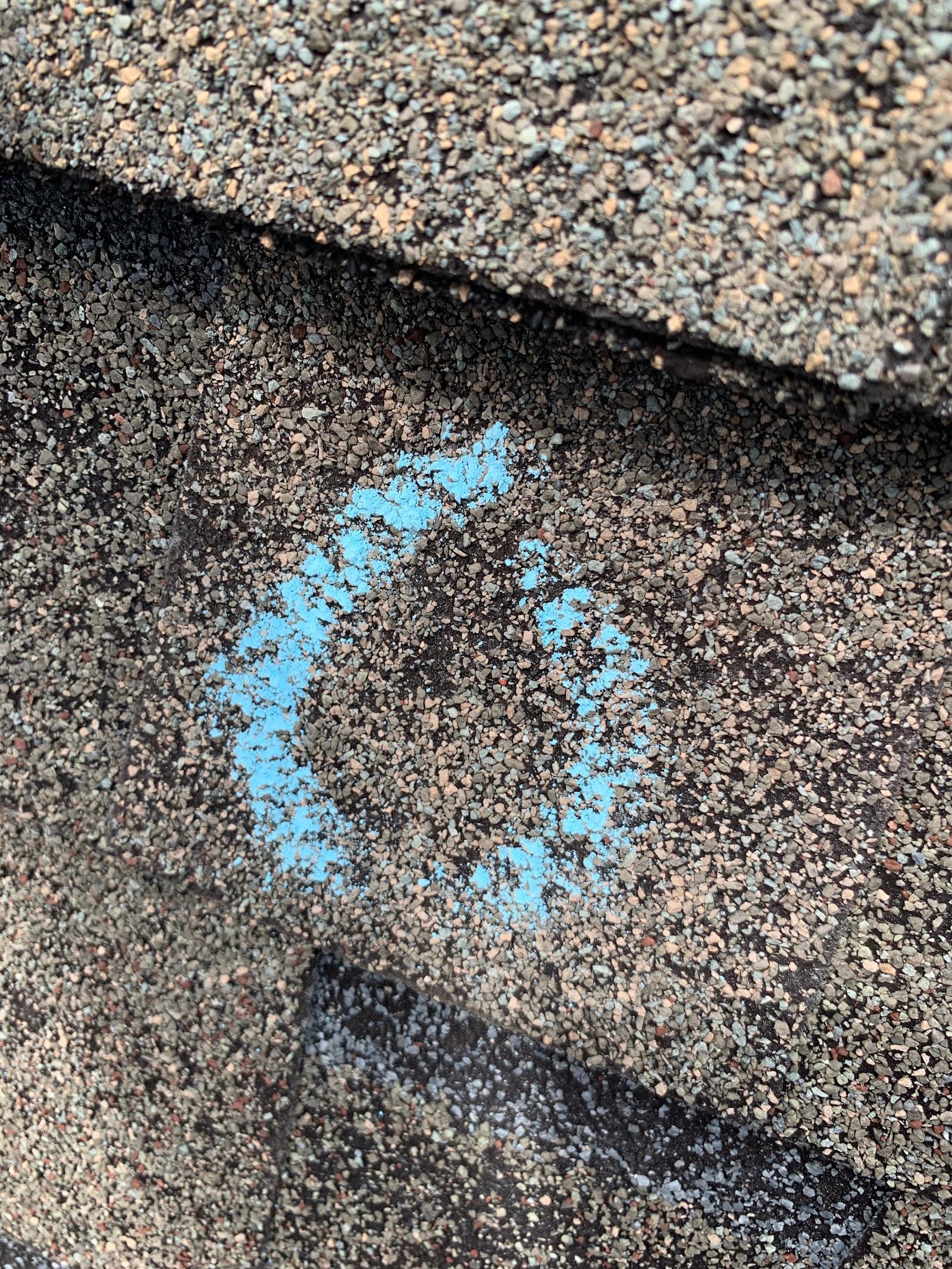
- Dark, soft bruises where the granules got knocked off and the black mat underneath is showing.
- Random impact marks, not in any pattern, across the slopes that faced the storm.
- Dented gutters, downspouts, and metal vents. This is usually the easiest evidence to see from the ground.
- Cracked or split shingles, and shiny spots where the surface has fractured.
- Dings on soft metal around the house — the AC fins, the mailbox, a grill lid. If those took hits, the roof did too.
Please do not climb up to check.
Hail bruising is subtle and easy to confuse with normal wear, and a roof is a bad place to learn that. Let somebody trained and insured go look.
What to do the week after a hailstorm
- 1Check the ground-level clues first: gutters, downspouts, vents.
- 2Write down the storm date. You will need it for any claim.
- 3Get a professional inspection with photos, before you call your insurer.
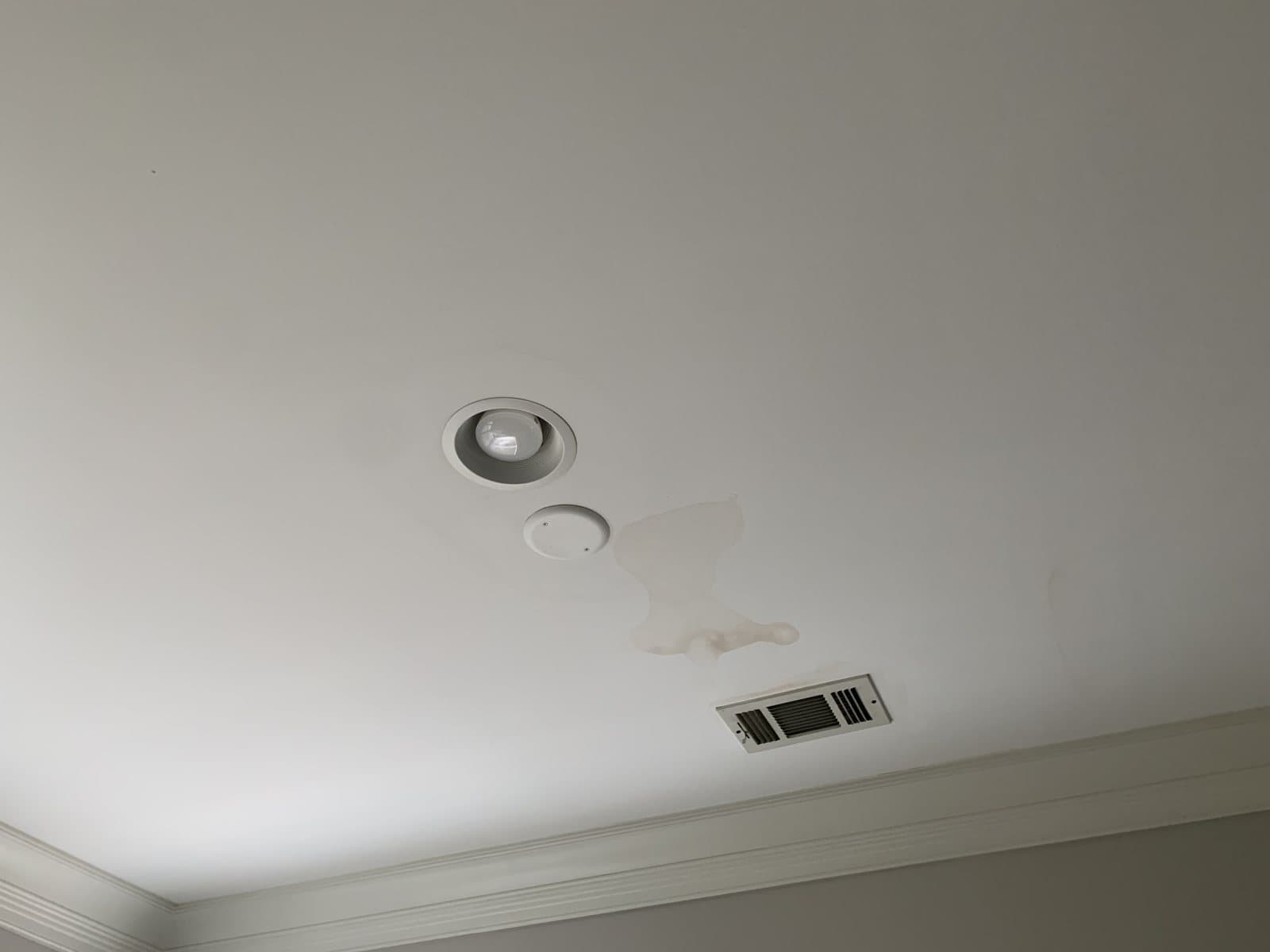
- 4If water is coming in, get it covered and keep the receipt.
- 5Do not sign anything with somebody who knocks on your door promising a free roof.
Cosmetic vs. functional damage
Insurers separate cosmetic damage, where it looks bad but still sheds water, from functional damage, where the roof's ability to protect the house is compromised.
Functional damage is what gets claims approved. Close-up photos, a test square, and measurements are how that case gets made.
Not sure a storm hit your street?
North Georgia weather is local. One neighborhood gets hammered and the next one stays dry. Our storm tracker maps verified hail and wind events across the area so you can check your own address before you schedule anything.
Bailey Roofing & Restoration offers free, no-pressure inspections across Buford and North Georgia — with photo documentation you can keep whether or not you file a claim.
Want a straight answer about your roof?
Book a free, no-pressure inspection. You get photos and an honest assessment — whether or not you do anything about it today.
Frequently asked
Can I see hail damage on my roof from the ground?
Usually not reliably. Dented gutters and vents are a real clue, but the shingle bruising that matters for a claim needs a close-up look.
How long after a hailstorm can I file a claim?
Your policy sets that deadline, not the state. Most require prompt notice. Sooner is better either way, because it is easier to tie the damage to a specific storm. Document it now even if you wait to file.
Should I trust a roofer who knocks on my door after a storm?
Be careful. A reputable local company will not push you to sign on the spot. Get an independent inspection and a written scope before you commit to anybody.