The days after a fire feel more chaotic than they need to. There's an order to this: what to do in the first 48 hours, why smoke is the bigger half of the job, and how the rebuild and the claim fit together.
If you've just had a fire, the first thing worth saying is that the next few days will feel more chaotic than they need to. There's an order to this, and most of it is not urgent in the way it feels.
This is a plain description of what actually happens after a house fire — what to do in the first 48 hours, why smoke is a bigger problem than most people expect, and how the rebuild and the insurance claim fit together. Written for homeowners in Buford and the surrounding North Georgia communities.
The first 24 hours
Don't go back in until the fire department clears it. Not for documents, not for pets, not for the safe. Structures that have burned can have compromised framing, and the air inside after a fire contains combustion products you don't want to breathe without protection. The fire department will tell you when it's safe.
Call your insurer and open the claim. You don't need to know the extent of the damage to do this — you just need to report the loss. Most carriers have a 24-hour claims line. Ask them three specific things: your claim number, whether your policy includes Additional Living Expenses (ALE), and how to submit receipts. ALE is the coverage that pays for a hotel, meals, and the extra cost of living somewhere else while your home is uninhabitable, and it's the one homeowners most often forget to claim.
Keep every receipt from this point onward. Hotel, food, clothes, a phone charger, pet boarding. If you're relying on ALE, these are the claim.
For immediate needs — somewhere to sleep tonight, food, essentials — the American Red Cross responds to home fires. They can be reached at redcross.org or 1-800-RED-CROSS. Local fire departments will often make the referral for you.
Call your mortgage servicer too
Insurance payouts on a significant fire loss are usually issued jointly to you and your mortgage lender, and the lender releases funds in stages as the work is completed. Nobody tells you this in advance, and finding out three weeks in is an unpleasant surprise. Ask your servicer what their process is early.
Securing the property
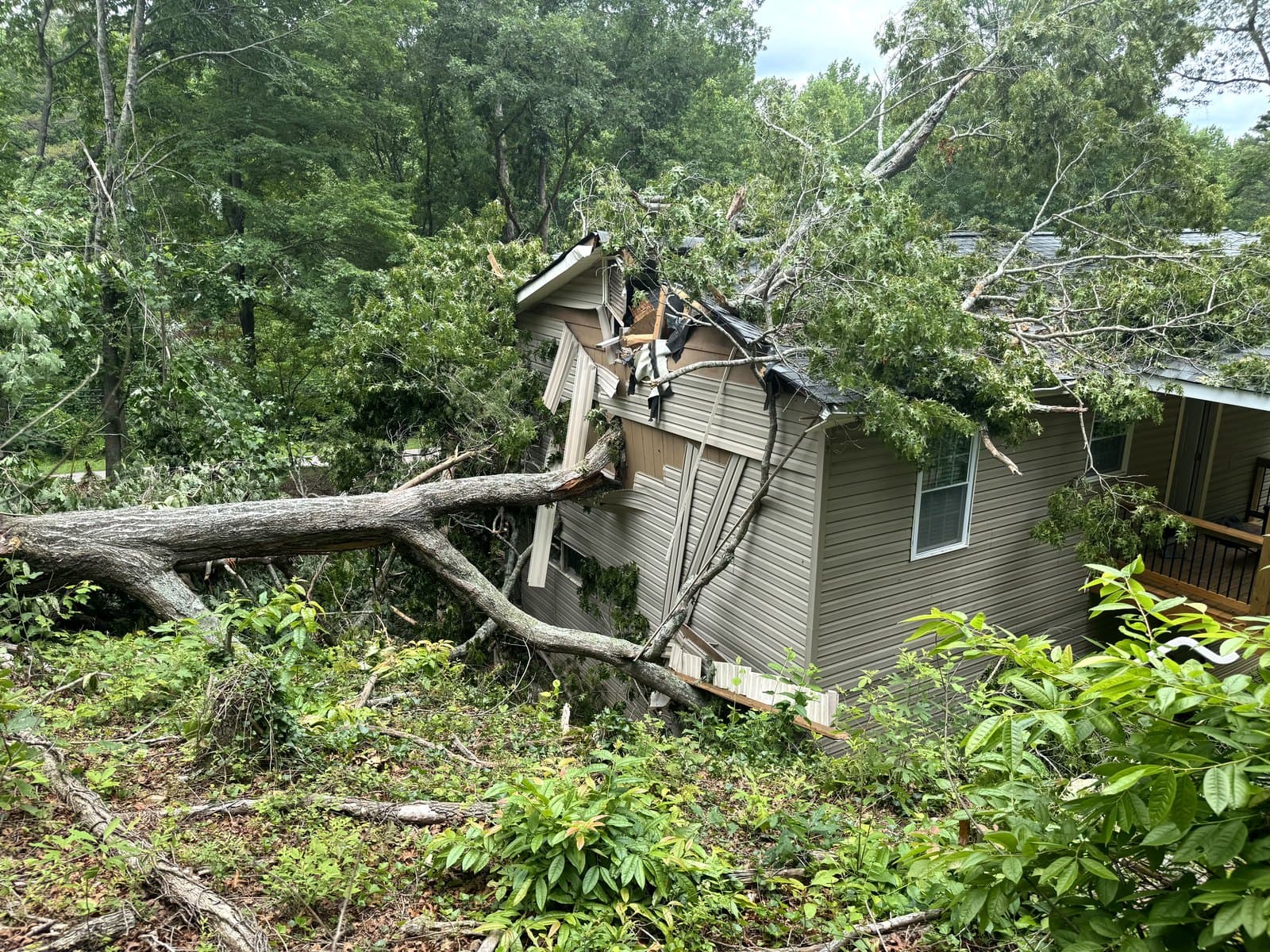
Once the fire is out, the house is open. Firefighting means ventilation holes cut in the roof, doors and windows forced, and often a substantial amount of water introduced into the structure.
That means three things need to happen fast, usually before your adjuster has even visited:
- 1Board-up and tarping. Open windows, doors, and roof holes need covering — against weather, and against the fact that a visibly empty damaged house attracts attention.
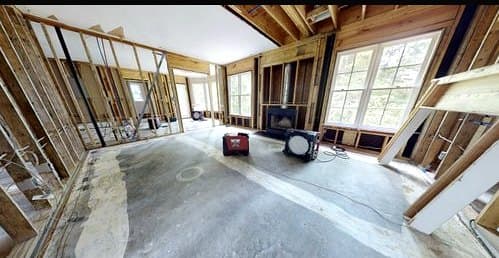
- 2Water extraction and drying. This is the part people don't anticipate. A fire that's been put out is also a water loss. Fire hoses put a great deal of water into a structure in a short time, and that water is now in the insulation, the subfloor, and the wall cavities. The EPA's guidance on wet materials is to dry them within 24 to 48 hours to prevent mold growth — which means the drying starts before anyone talks about rebuilding. It's genuinely common for a fire-damaged home to develop a mold problem in the weeks afterward purely from the firefighting water.
- 3Power and utilities made safe. Usually handled by the fire department and the utility, but confirm it.
Emergency mitigation like this is standard covered work under most policies, and you generally do not need to wait for adjuster approval to start it — carriers expect you to prevent further damage. Document everything with photos before and during.
The smoke problem
Here's what surprises people most: the fire damage is often the smaller half of the job.
Smoke moves through a house far beyond where anything burned. It travels through the HVAC system, gets into wall cavities, and deposits soot on surfaces two floors away from the fire. And smoke residue isn't just dirty — depending on what burned, it can be acidic, and it keeps working on surfaces long after the fire is out. Soot left on metal fixtures, appliances, and finishes causes progressive etching and corrosion. Delay makes it worse and more of it becomes unsalvageable.
Different fires leave different residues, and they need different treatments:
- Dry smoke from fast, high-temperature fires — powdery, and it works its way deep into cracks and cavities.
- Wet smoke from slow, smoldering, low-heat fires — sticky, dense, strong odor, and much harder to clean.
- Protein residue from kitchen fires — often nearly invisible, discolors paint and varnish, and carries an intense odor that will not come out with ordinary cleaning.
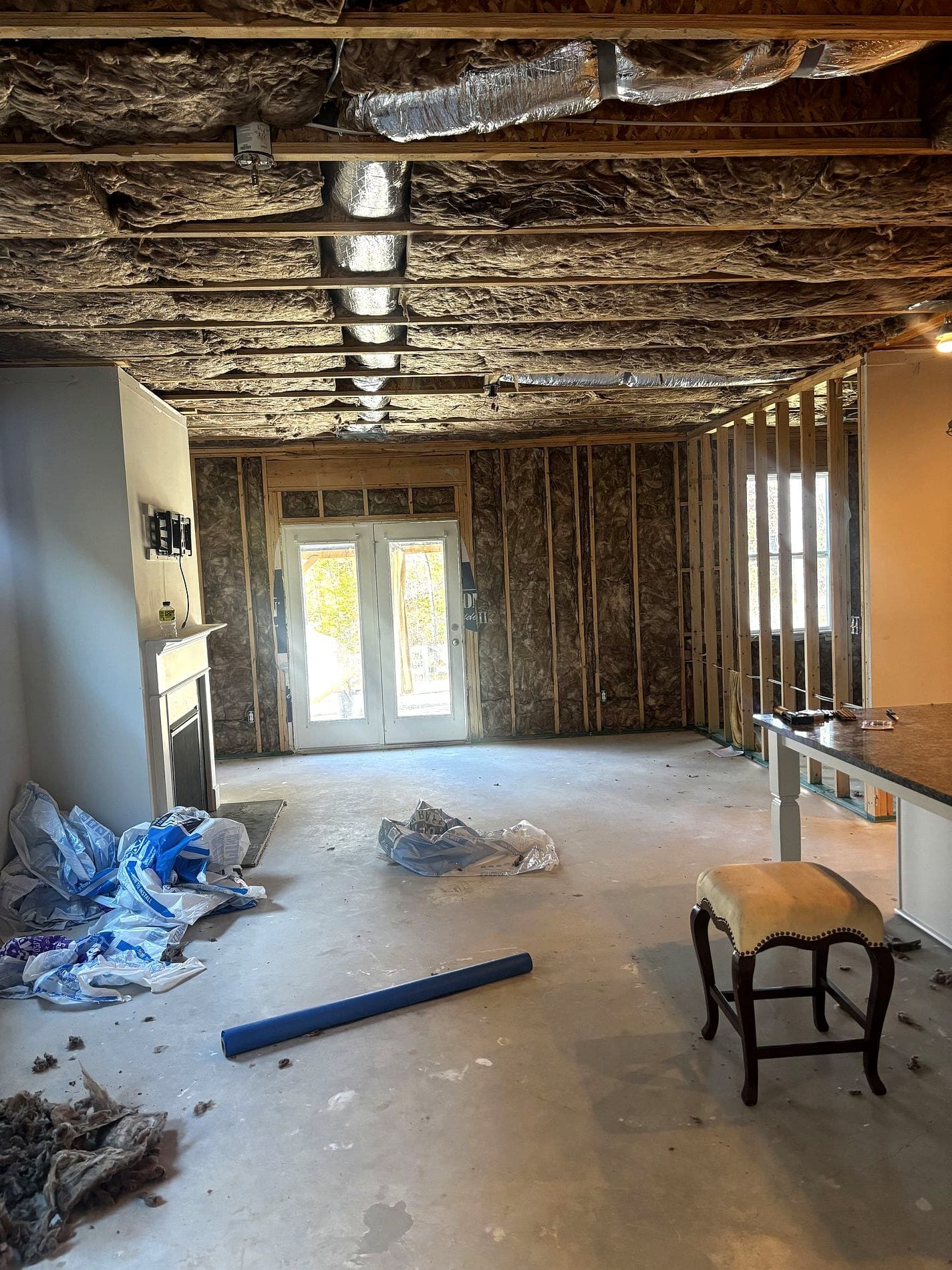
Odor is its own separate battle. Smoke odor lives in porous materials — insulation, carpet padding, drywall, upholstery — and no amount of surface cleaning or air freshener addresses it. Removing it means removing or properly treating the material holding it. Anyone who tells you they can deodorize a significant smoke loss by fogging it and leaving is telling you something that isn't true.
The HVAC system deserves specific mention: if the system ran at all during or after the fire, it has distributed soot through every duct in the house, and it will keep redistributing it every time it runs until it's cleaned.
What it costs
These are third-party figures, not our prices, and the ranges are enormous because "fire damage" covers everything from a scorched kitchen to a total loss.
Angi's 2026 data puts fire damage restoration at an average of about $27,477, with most projects landing between $3,083 and $52,031. For the Suwanee, GA area specifically, Angi's normal range is $3,552 to $85,714 with an average of $44,633 — a much wider spread, which tells you how little an "average" means on this kind of loss.
For smoke and soot without significant structural fire damage, Angi puts smoke remediation at an average of $3,000, ranging from $200 for minor odor work up to $12,000 after a house fire. Budget separately for HVAC duct cleaning, which Angi puts at $150 to $800 — and given how thoroughly the system distributes soot, it's rarely optional.
The practical point isn't the number. It's that for most homeowners this is an insurance-funded project rather than an out-of-pocket one, and the size of the settlement depends almost entirely on how completely the loss is documented and scoped in the first two weeks. That's where the money is won or lost — not in negotiating at the end.
Helpful next steps
Your belongings
Contents are a separate part of the claim from the structure, and they're handled differently.
Restorable items are typically packed out — inventoried, removed, cleaned and deodorized off-site, stored, and returned once the house is finished. Non-restorable items go on a contents list for the claim, which means somebody has to itemize what was lost, with rough age and value. It is a tedious, emotionally unpleasant task, and it's worth doing carefully rather than quickly, because an under-documented contents list is money you don't get back.
If you have any pre-fire photos of the inside of your house — holiday pictures, real estate listing photos, anything — they're worth more than you'd think for reconstructing what was in each room.
Some things can't be restored and shouldn't be. Food exposed to heat or smoke, medications, and cosmetics all go, regardless of packaging.
The rebuild
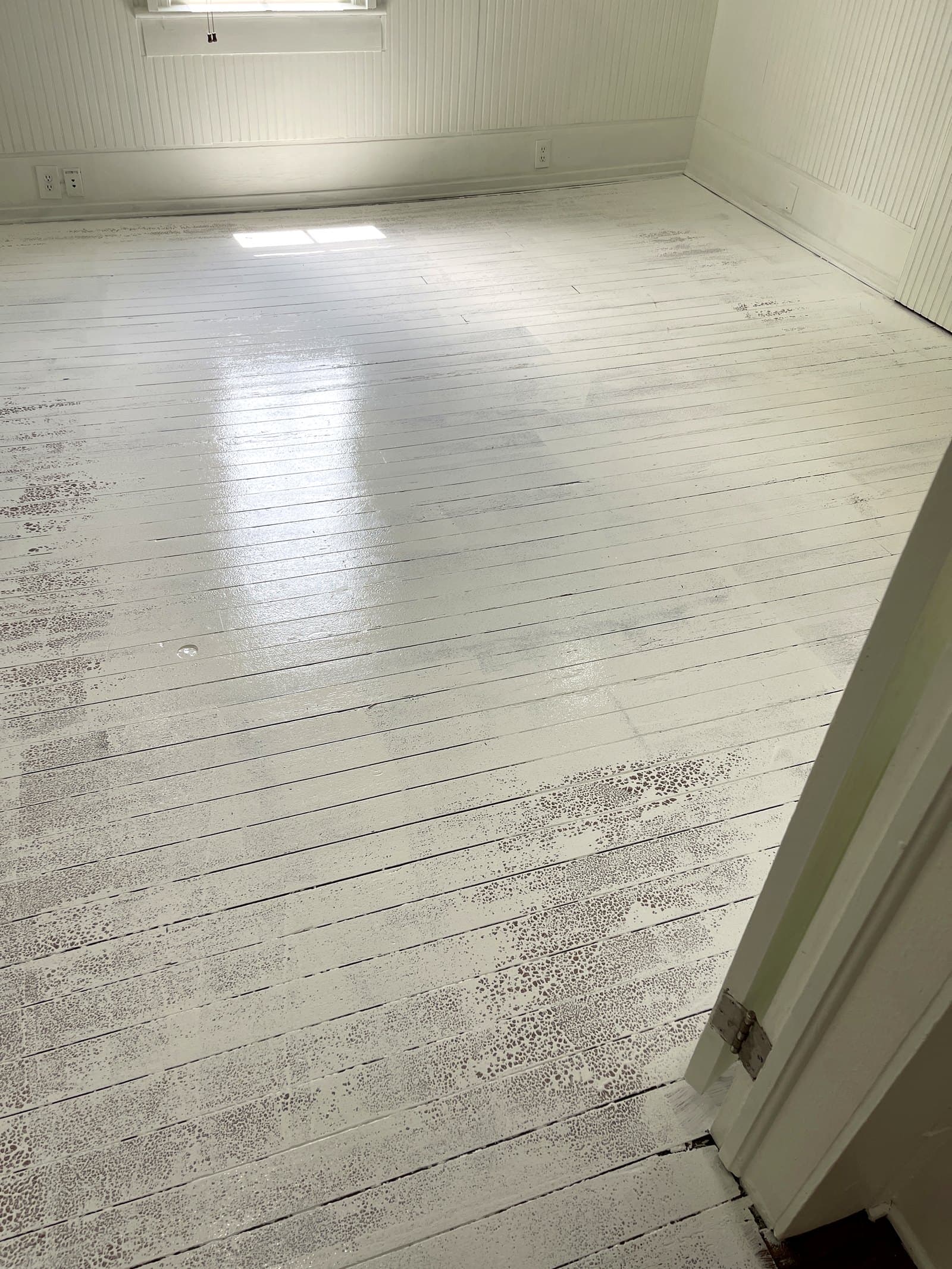
Once mitigation is done, the property is dry, and the scope is agreed with the adjuster, reconstruction starts. Depending on the extent, that runs from replacing drywall, insulation and finishes in a few rooms, to taking the affected area back to the studs and rebuilding — framing, electrical, HVAC, drywall, flooring, paint, trim, cabinetry.
How long it takes depends entirely on scope, and anyone who gives you a timeline before the scope is agreed is guessing. What is fair to say is that a significant fire rebuild is measured in months rather than weeks, and that the drying phase alone runs several days with monitoring before rebuilding can start.
The thing worth getting right at the outset is who's coordinating it. A fire loss involves mitigation, contents, structural repair, multiple trades, and an insurance claim running in parallel. Split across four separate companies, the gaps between them are where the delays and the finger-pointing live.
Sources and further reading
How we handle it
Bailey does both halves — mitigation and reconstruction — with one team. Emergency response is available 24/7, and we're based at 218 S Hill St in Buford, so we're local to Gwinnett rather than dispatched from somewhere else.
Practically, that means: emergency board-up and tarping, water extraction and structural dry-out with documented moisture readings, mold and moisture remediation, fire and smoke cleanup, soot and odor removal, pack-out and inventory of your belongings, and full interior reconstruction — drywall, paint, flooring, trim, finishes — back to better than it was.
And we meet your adjuster on site. We document the loss, scope it properly, provide insurance-ready reports and pricing, and manage the paperwork with any carrier. You make the decisions; we do the legwork. That matters more on a fire claim than on almost any other kind, because the scope is complicated and the first assessment tends to stick.
We also offer financing for anything insurance doesn't cover.
This is general information, not legal or insurance advice. Policies vary — read yours and confirm specifics with your insurer or agent.
Bailey Roofing & Restoration offers free, no-pressure inspections across Buford and North Georgia — with photo documentation you can keep whether or not you file a claim.
Want a straight answer about your roof?
Book a free, no-pressure inspection. You get photos and an honest assessment — whether or not you do anything about it today.
Frequently asked
What should I do in the first 24 hours after a house fire?
Stay out until the fire department clears the structure. Call your insurer and open the claim, and specifically ask about Additional Living Expenses coverage for a hotel and meals. Keep every receipt from that point on. For immediate shelter and essentials, the American Red Cross responds to home fires at 1-800-RED-CROSS.
Do I have to wait for the insurance adjuster before starting cleanup?
Generally no for emergency mitigation — board-up, tarping, and water extraction to prevent further damage. Carriers expect you to limit the loss. Document everything with photos before and during. Full reconstruction does wait for the scope to be agreed.
Why is there water damage if the problem was a fire?
Firefighting puts a large volume of water into the structure quickly, and it ends up in insulation, subfloors, and wall cavities. The EPA advises drying wet materials within 24 to 48 hours to prevent mold. It's common for fire-damaged homes to develop mold problems purely from the firefighting water if drying is delayed.
Can smoke odor be removed completely?
Usually yes, but not by surface cleaning or deodorizers. Smoke odor lives in porous materials like insulation, carpet padding, drywall, and upholstery, so removing it means removing or properly treating those materials. The HVAC system also needs cleaning if it ran during or after the fire, or it will keep redistributing soot.
How much does fire damage restoration cost?
Angi's 2026 data puts the average around $27,477, with most projects between $3,083 and $52,031; for the Suwanee, GA area the normal range is $3,552 to $85,714. Smoke remediation without major structural damage averages about $3,000. Most fire losses are insurance-funded, and the settlement depends heavily on how thoroughly the loss is documented and scoped early.
What happens to my belongings?
Restorable items are inventoried, packed out, cleaned and deodorized off-site, stored, and returned when the house is finished. Non-restorable items go on a contents list for the claim. Food, medications, and cosmetics exposed to heat or smoke should be discarded regardless of packaging.
How long does a fire rebuild take?
It depends entirely on the scope, and any timeline given before the scope is agreed is a guess. Structural drying alone takes several days with monitoring before rebuilding can begin, and a significant rebuild is measured in months rather than weeks. We give you a clear plan once the scope is settled and update you at each phase.