A finished roof is more than its shingles. Follow the PCBC business-complex restoration through each layer, with real project photos and clear answers for property managers.
A roof replacement is easy to judge by its finished shingles. The layers underneath are harder to see once the job is done. At PCBC Business Complex, Bailey documented the build so the property team can follow the work from exposed decking to the finished roof surface.
The project at a glance
- A full tear-off exposes the roof deck before new protective layers go down.
- Valley membrane and underlayment sit beneath the architectural shingles.
- The specified roof covering is CertainTeed Landmark.
- A business property’s warranty terms should be read separately from residential lifetime advertising.
What goes into a business-complex roof replacement?
Explore the roof build
Choose a stage to see why it matters. The complete photo story continues below.
Tear-off
A full tear-off makes the surface beneath the shingles accessible. It gives the crew an opportunity to identify problems that an overlay could conceal.
The walkthrough below uses real project photographs. Each stage explains the work and the practical reason for it, without assuming you know roofing terminology.
01. Tear-off: Remove the old roof. Reveal the foundation.
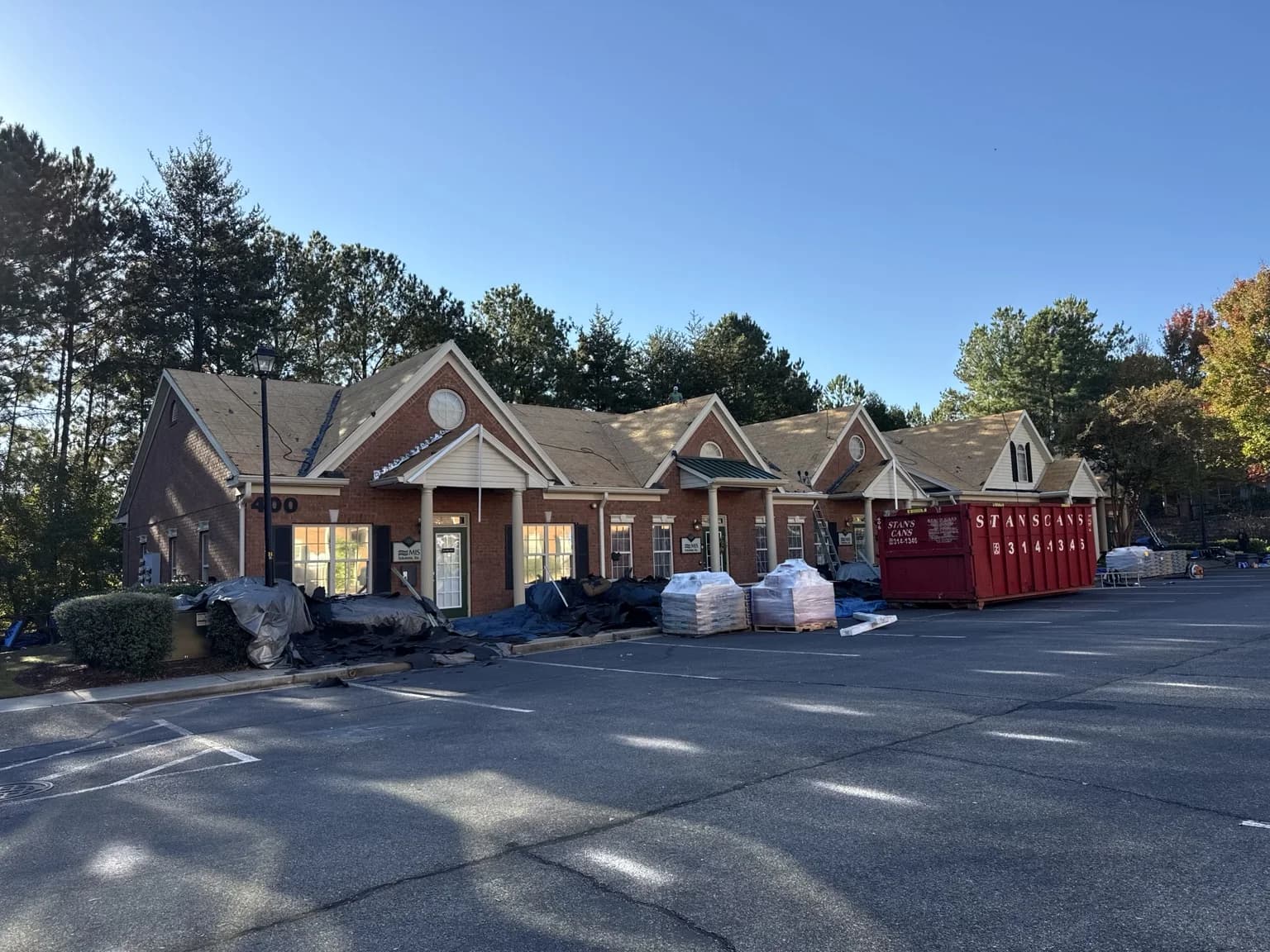
The old roofing was removed to expose the roof deck before the new layers were installed. The photo sequence then moves to bare wood decking across the roof.
Why this matters to the property
A full tear-off makes the surface beneath the shingles accessible. It gives the crew an opportunity to identify problems that an overlay could conceal.
02. Decking: The solid base beneath every roofing layer.
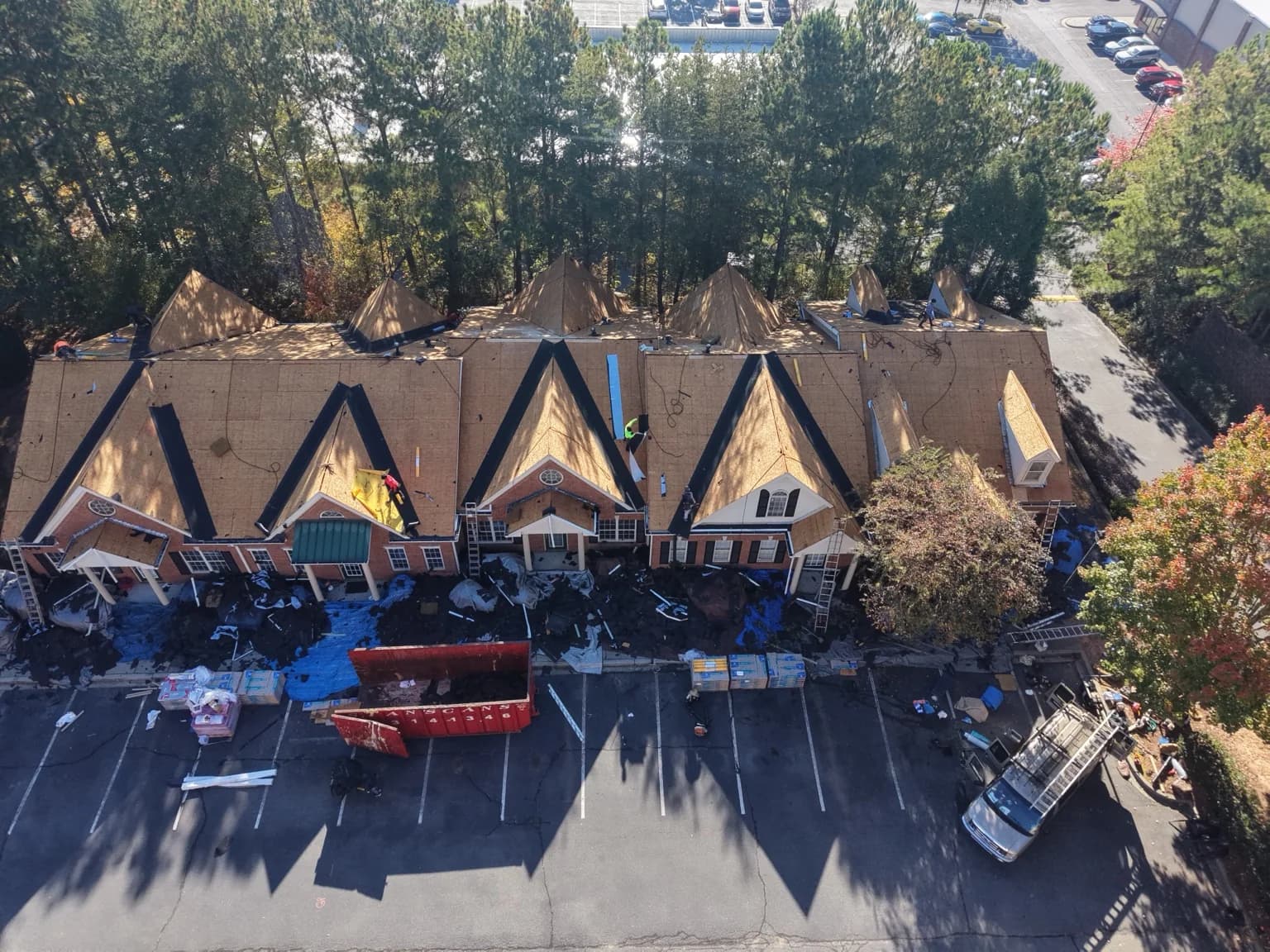
With the old roofing removed, the wood sheathing is visible across the building. This deck supports the underlayment and provides the fastening base for the shingles.
Why this matters to the property
Sound decking helps the new roofing stay securely attached. Any deteriorated sections must be addressed before the protective layers cover them.
03. Ice & water protection: Extra protection where roof slopes meet.
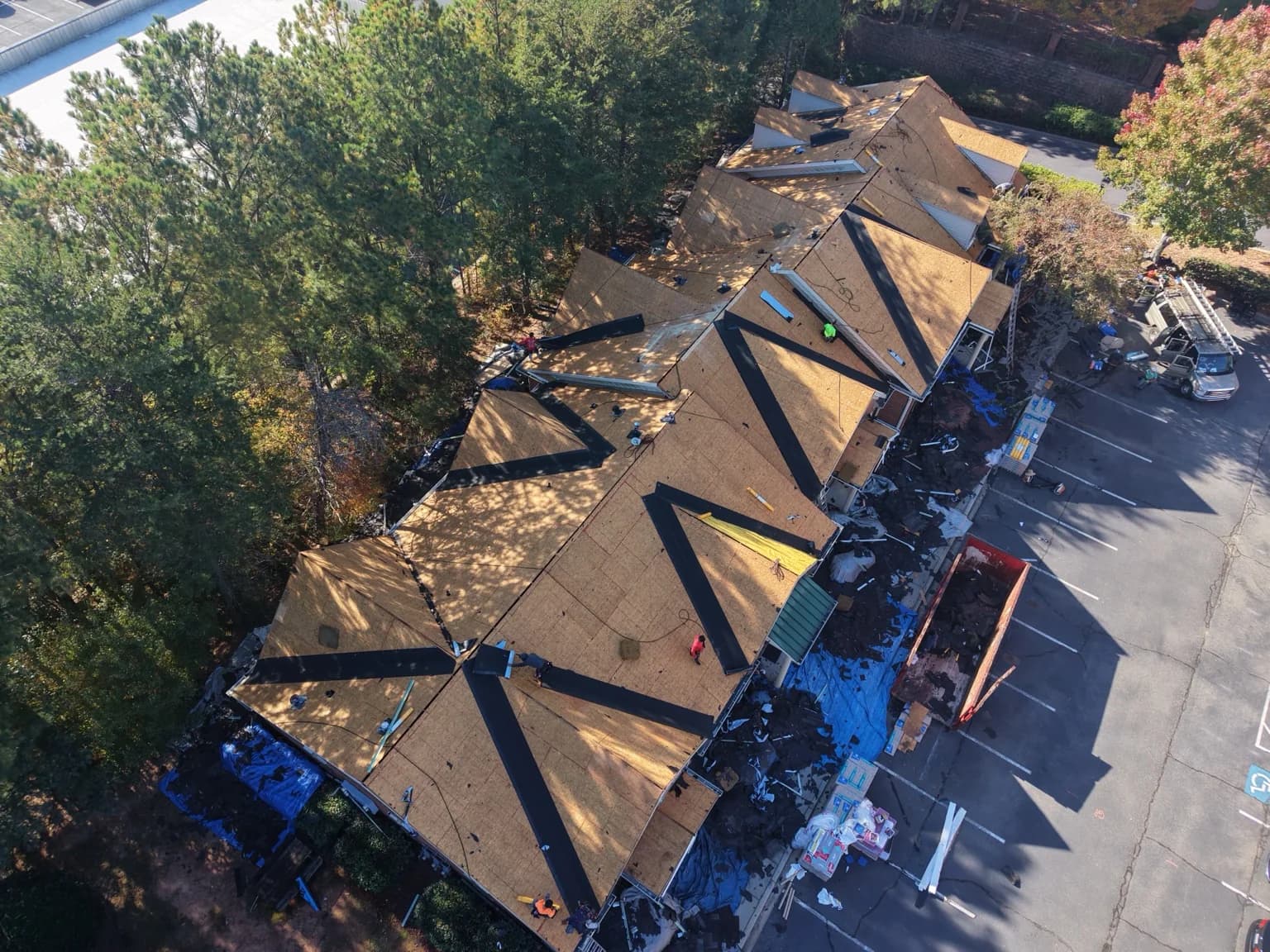
The build sequence shows protective membrane at the valleys: the channels where two roof slopes meet and direct runoff toward the roof edge.
Why this matters to the property
Valleys collect water from adjoining slopes. A waterproofing layer beneath the shingles adds protection in these more vulnerable drainage areas.
04. Felt / underlayment: A second line of defense beneath the shingles.
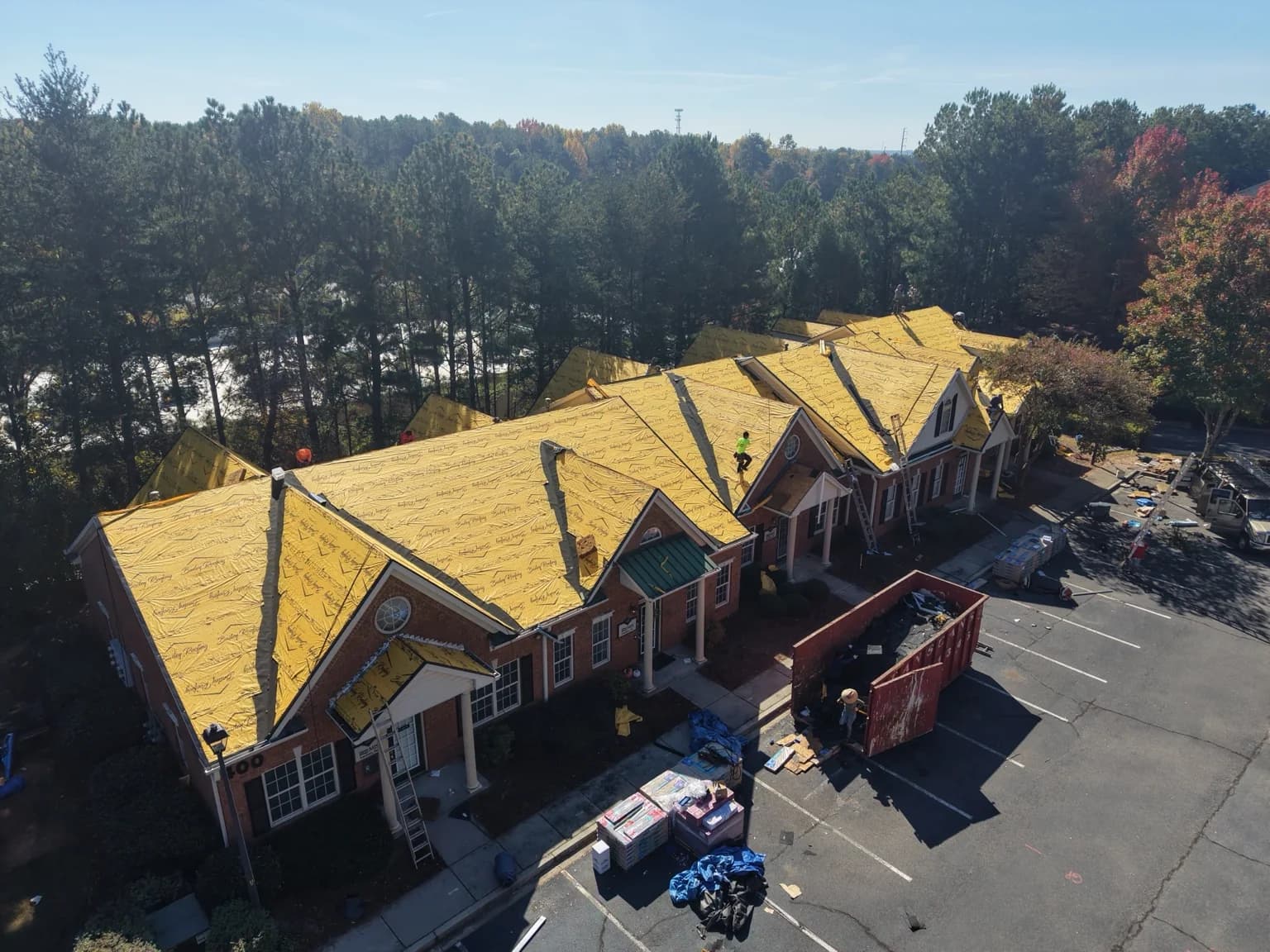
The yellow underlayment forms the next layer over the deck. Often called felt, underlayment is the water-resistant barrier between the wood and the finished shingle surface.
Why this matters to the property
Shingles shed most of the rain. Underlayment provides a backup layer beneath them and helps protect the deck as the roof system is assembled.
05. Starter course: Build the roof from a secure first row.
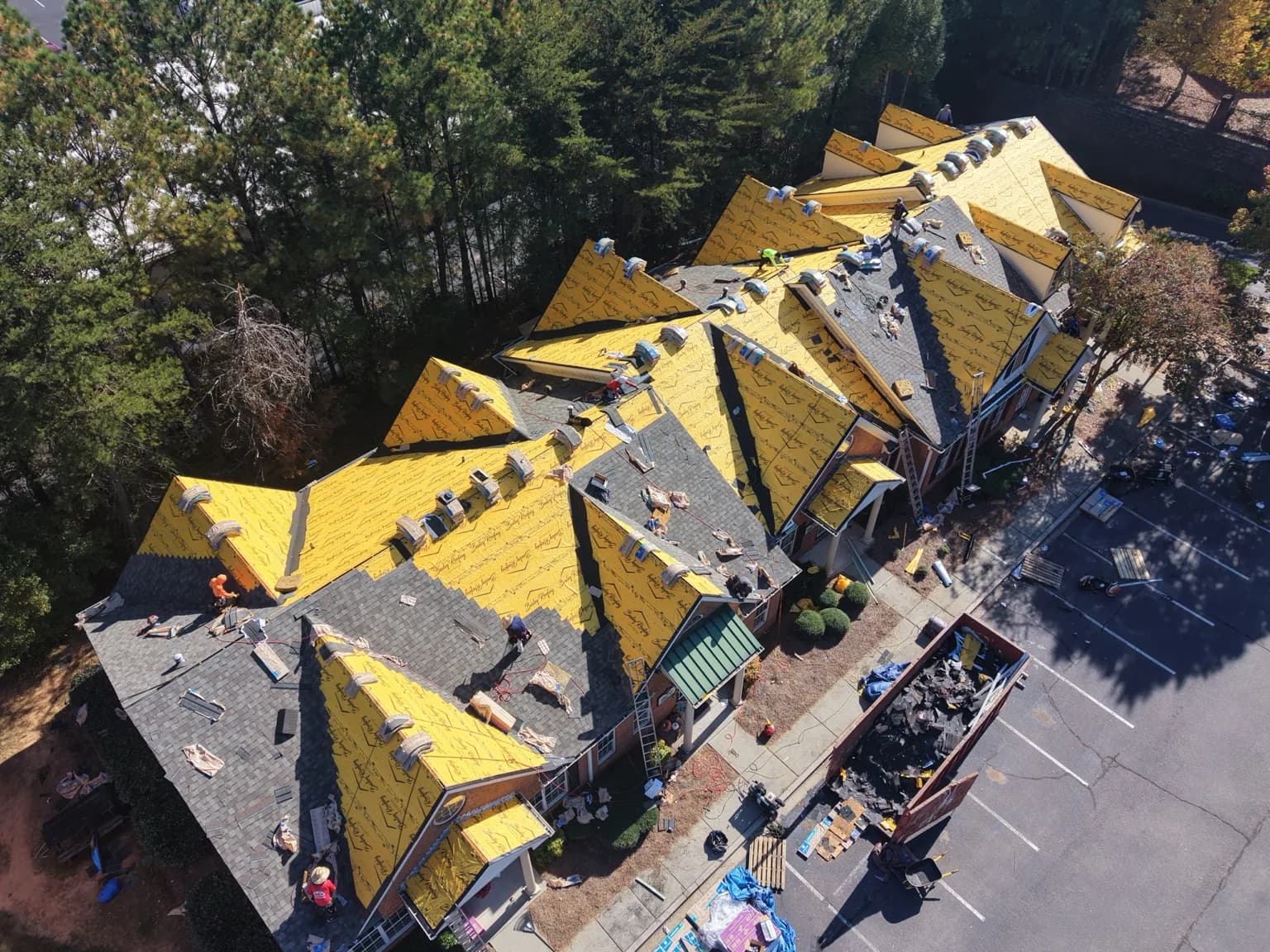
Starter shingles belong beneath the first field-shingle course at the roof perimeter. They establish the starting edge and help the first row of shingles seal properly.
Why this matters to the property
The roof edge is exposed to wind-driven rain and uplift. A compatible starter course supports the shingles where those forces can be strongest.
06. Landmark shingles: The finished weather-shedding surface.
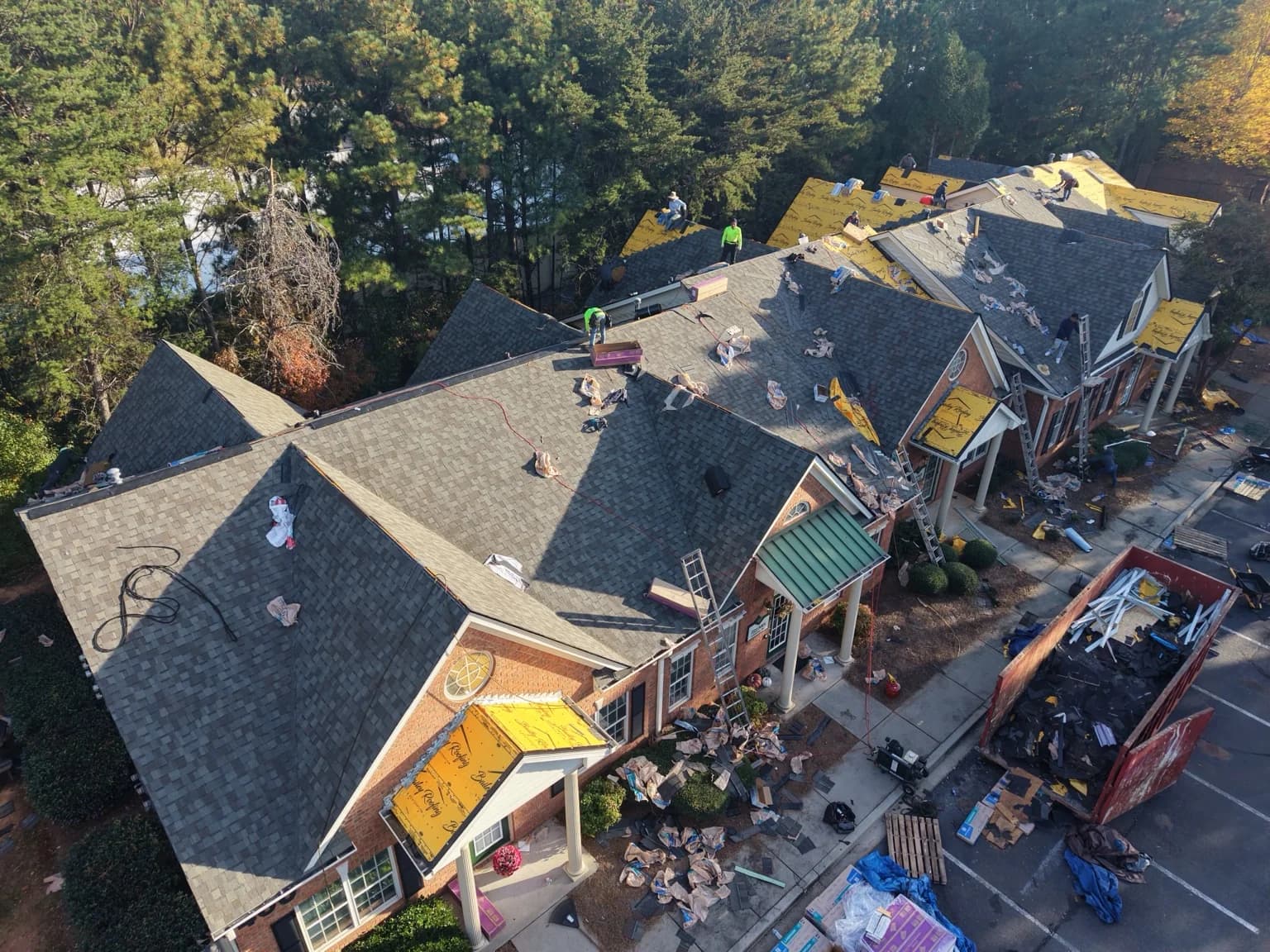
CertainTeed Landmark architectural shingles are the project’s specified roof covering. Their layered profile creates depth and a consistent finished appearance across the complex.
Why this matters to the property
Overlapping courses direct rain down the roof. Correct placement, fastening and sealing are central to the performance of the shingle surface.
07. Hip & ridge: Finish the roof’s peaks and transitions.
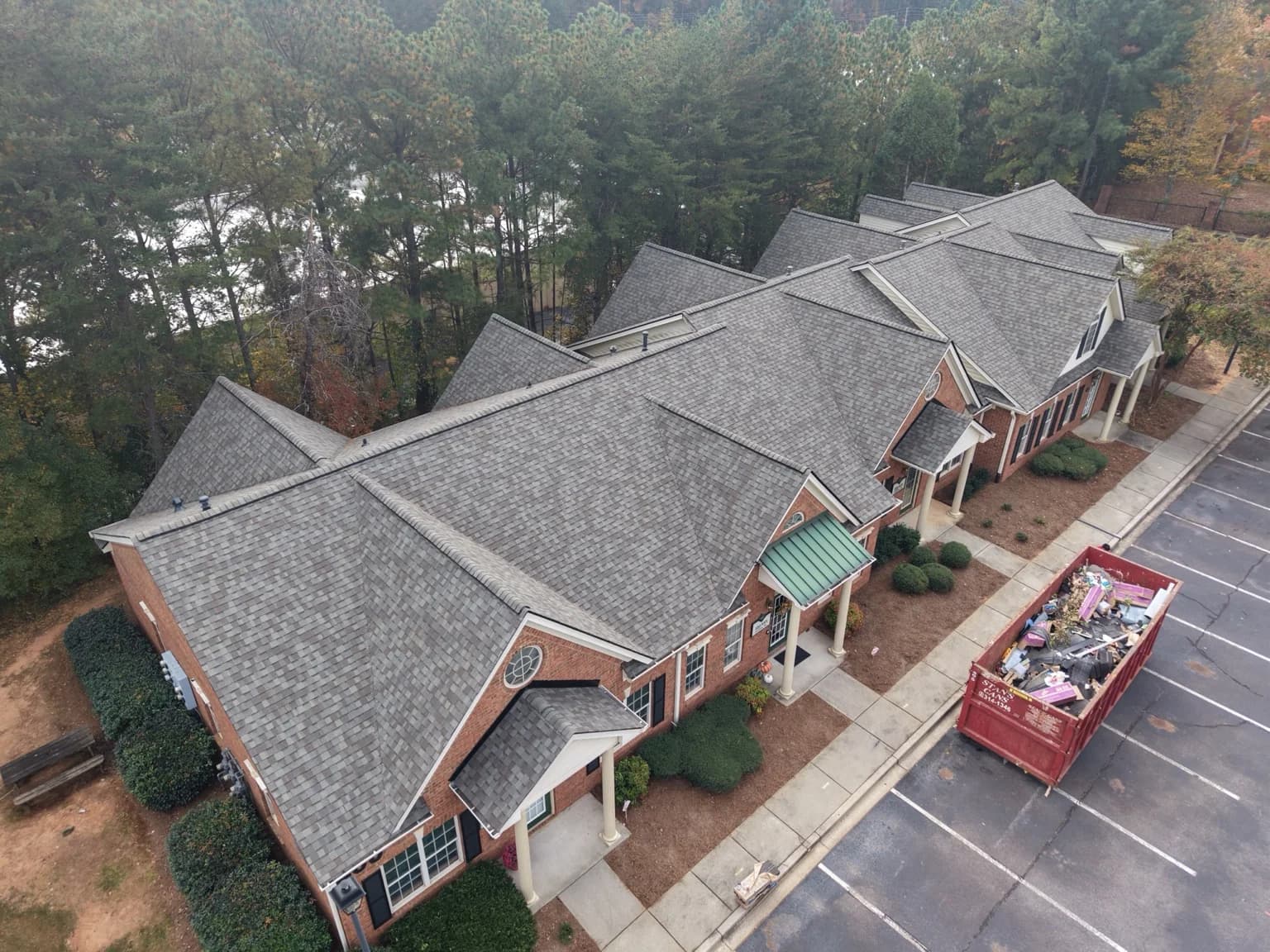
Cap shingles finish the hips and ridges: the raised lines where roof slopes meet. These pieces cover the junctions and give the roof a defined, continuous finish.
Why this matters to the property
A roof needs protection at its high points as well as across the broad slopes. Compatible cap shingles complete those exposed transitions.
08. Cleanup & closeout: Finish the job around the building, too.
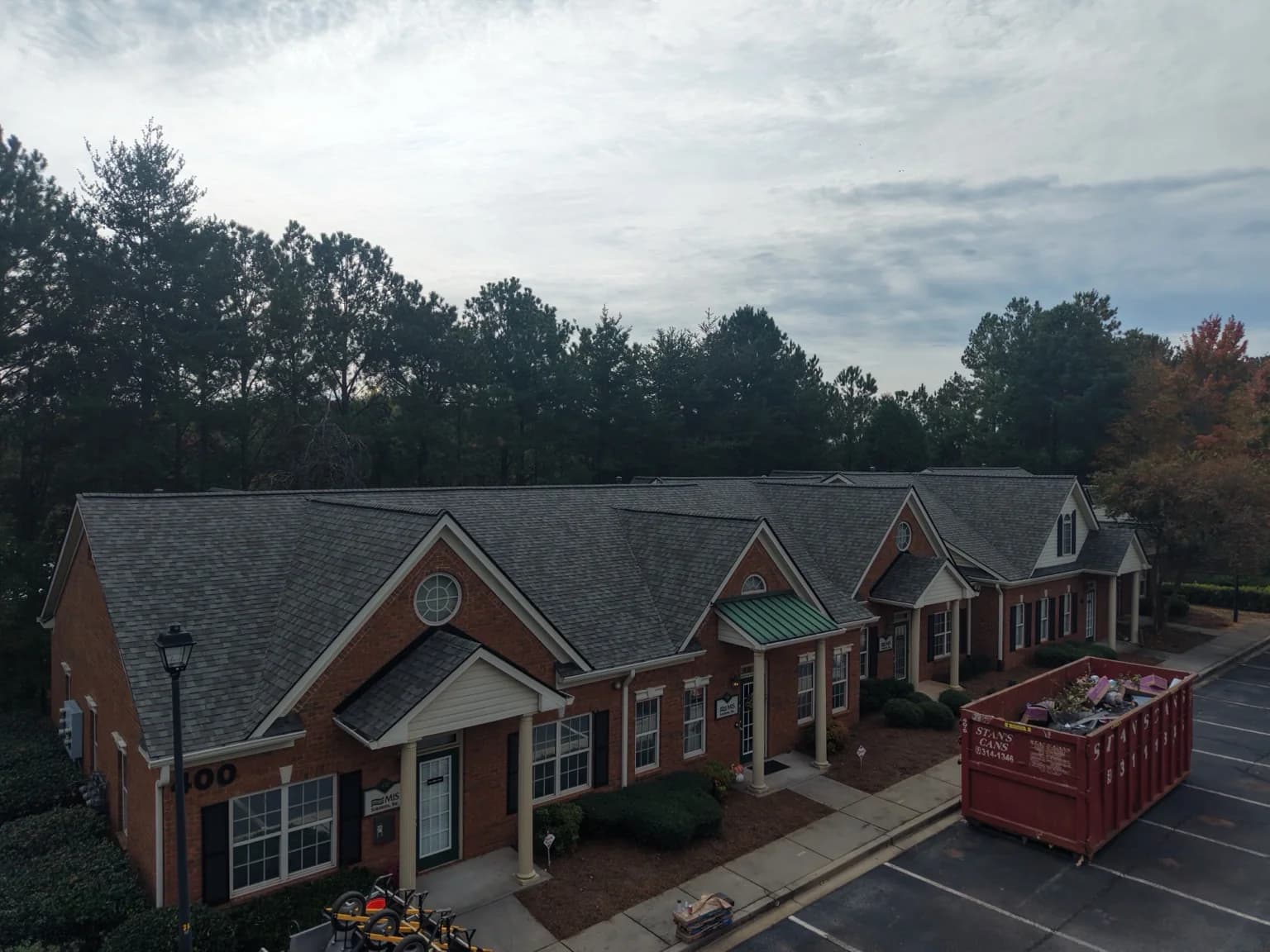
Bailey’s published cleanup process includes removing roofing debris, hauling away old materials and using a magnetic sweep to collect stray nails around the work area.
Why this matters to the property
For a business complex, clear entrances, sidewalks and parking areas are part of a useful handover. Final cleanup and a walkthrough close the work sequence.
The finished roofline, seen from above
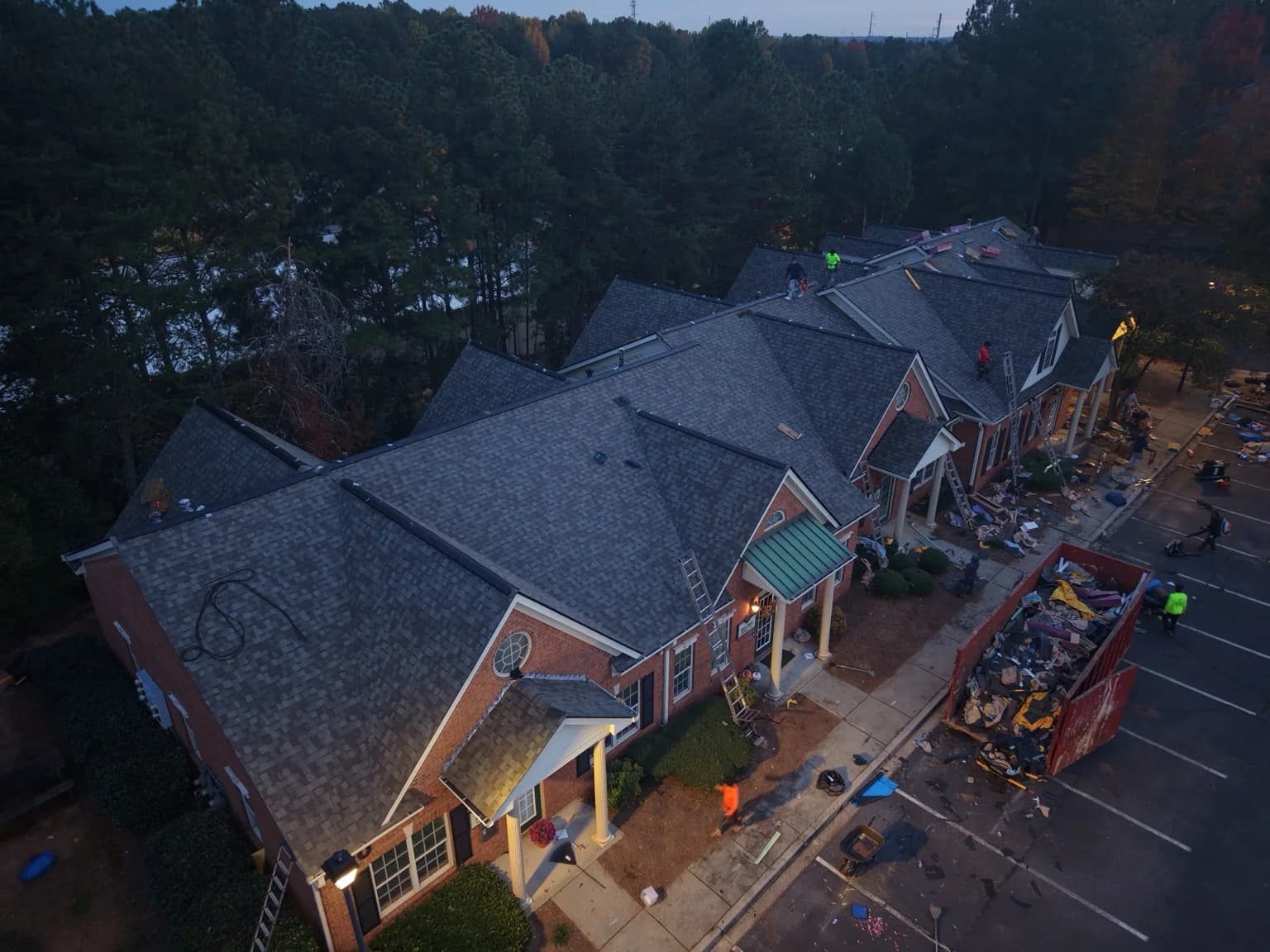
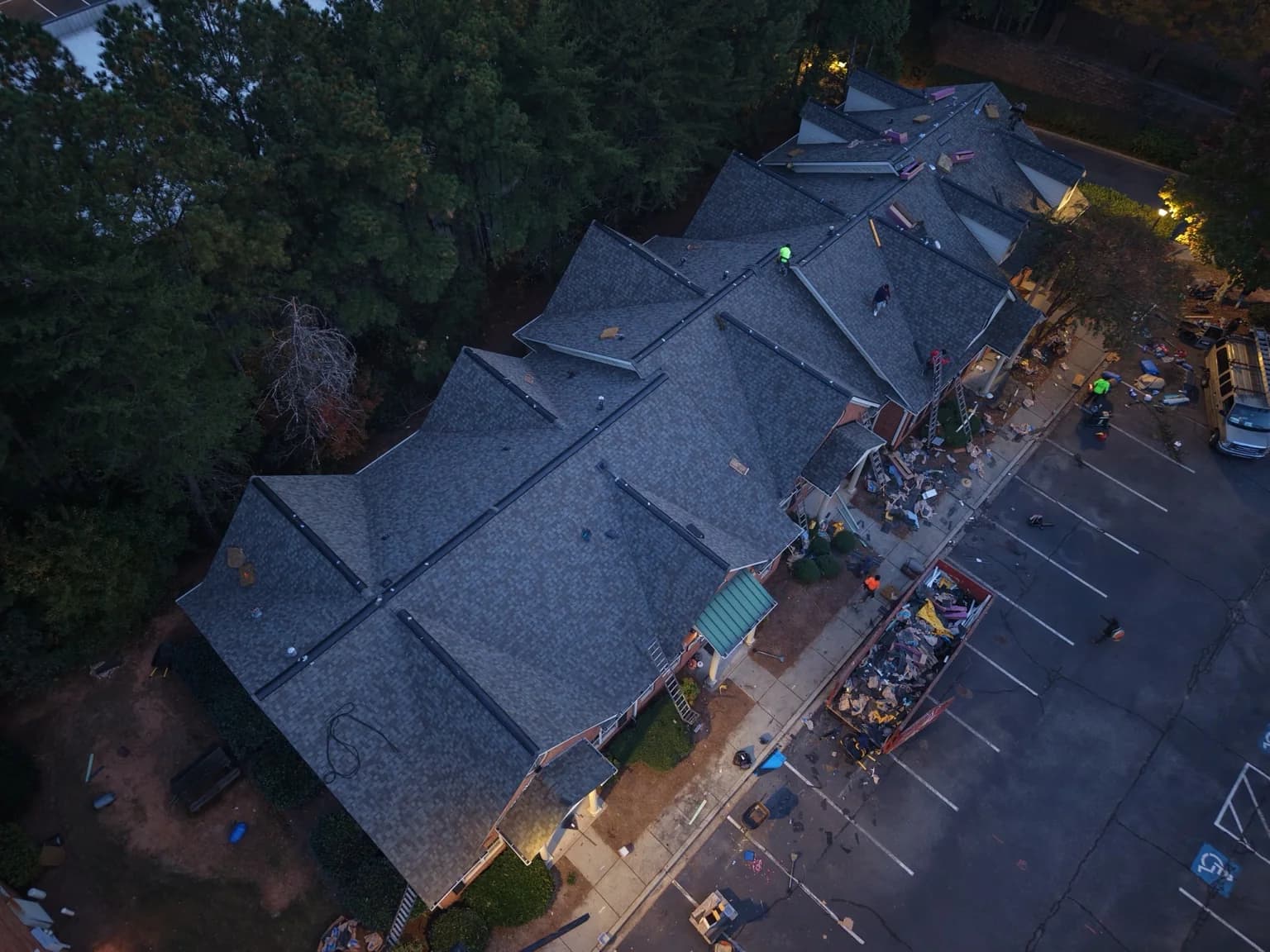
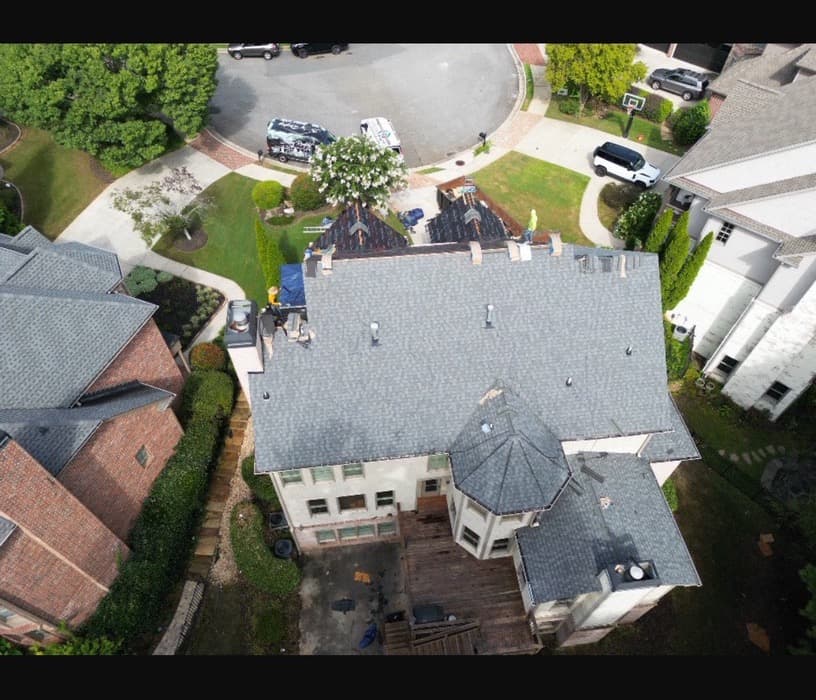
The later photographs show the new shingle surface and capped peaks. They also show a debris container and work equipment. Those images record the roofing result during closeout; they should not be treated as proof that every item had already left the site.
Why CertainTeed Landmark is part of this build
Landmark architectural shingles use a layered profile to give the roof visual depth. On a long business-complex building, a consistent shingle surface helps the individual gables and entrances read as one finished property. The full roof still depends on the deck, waterproofing details, underlayment, perimeter starter, ridge caps, flashing and ventilation working together.
What warranty applies to a business-complex shingle roof?
There are two different kinds of protection to keep in your property file: CertainTeed’s coverage for manufacturing defects and Bailey’s workmanship warranty for installation. Neither should be confused with property insurance or a guarantee of the roof’s service life.
Business ownership changes the warranty wording
CertainTeed’s published standard Landmark Other Ownership terms list a 40-year limited manufacturing-defect warranty and a 5-year SureStart period. The installation-date warranty, exact shingle product and any issued extended-warranty certificate govern the actual coverage. Residential lifetime language is not a substitute for those business-property terms.
During the standard SureStart period, eligible defective-shingle materials and labor are covered under the manufacturer’s terms; coverage is reduced afterward. Standard Landmark terms exclude tear-off, metal work, flashing and disposal. Bailey’s workmanship duration and scope are stated in the written project warranty.
Current Landmark product information lists a 15-year, 110 mph wind warranty, with a 160 mph upgrade available when required CertainTeed starter and ridge accessories and other installation conditions are satisfied. The algae-resistant version lists 25-year StreakFighter coverage with qualifying algae-resistant ridge accessories, or 10 years otherwise. The 25-year coverage is prorated after year 10. These are product features with conditions, not a certification of a particular PCBC upgrade.
Read the manufacturer information
Planning roofing work around an operating business
For an office or business complex, the conversation needs to cover more than a shingle color. Before work begins, agree on where the dumpster and materials will sit, how tenant entrances stay accessible, which parking spaces are affected, and how deliveries and roof access will be coordinated. Ask how the building will be protected if the weather changes during installation.
A useful schedule accounts for the roof’s size, the number of intersections and penetrations, weather and any decking repairs. This photo story does not establish the duration of the PCBC installation, and the timetable for another property should be based on its own inspection and scope.
What should a property manager keep after the roof is replaced?
- The signed scope, final invoice and any approved changes.
- The shingle variant, color and installed accessory records.
- The record of any decking replacements.
- Progress and completion photographs.
- The written Bailey workmanship warranty and CertainTeed warranty or registration certificate.
- The final cleanup and walkthrough record.
How to care for the roof after installation
Arrange an inspection annually and after a major storm. Keep gutters and downspouts clear, with spring and fall cleaning and more frequent attention where trees shed onto the building. Coordinate new roof penetrations and vendor access with a qualified roofer. If an interior stain or leak appears, record its location and timing and call Bailey promptly.
Plan the next step with Bailey
Project narrative: Bailey’s supplied installation sequence and ten project photographs. Photos document visible work; exact accessory models, concealed details and project-specific coverage are established by the written installation and warranty records.
Want a straight answer about your roof?
Book a free, no-pressure inspection. You get photos and an honest assessment — whether or not you do anything about it today.
Frequently asked
What are the steps in replacing an architectural-shingle roof?
The sequence starts with tear-off and exposed decking, then moves to ice-and-water protection, underlayment, starter shingles, field shingles, hip-and-ridge caps, cleanup and the warranty handover. Flashing and ventilation details also need to be addressed for the specific building.
Does all the roof decking get replaced?
Not automatically. The exposed deck is assessed before covering it. The PCBC photos show the wood surface, but do not establish how many sheets were replaced. The written decking record is the source for that quantity.
Is felt the same as ice-and-water shield?
They have different jobs. Underlayment, often called felt, provides a water-resistant backup beneath the shingles. Ice-and-water membrane adds waterproofing protection in vulnerable areas such as valleys. The exact products and coverage depend on the roof design and written scope.
Why do starter shingles and ridge caps matter?
Starter shingles help the first shingle courses seal at the roof perimeter. Hip-and-ridge caps cover the raised intersections between roof slopes. CertainTeed’s upgraded warranty options can require specific compatible accessories.
Are CertainTeed Landmark shingles covered for life on a business complex?
Do not assume residential lifetime language applies to a business property. CertainTeed’s published standard Landmark Other Ownership terms list a 40-year limited manufacturing-defect warranty and a 5-year SureStart period. The installation-date warranty, exact product and any registered upgrade control the actual coverage.
How long will a business roof replacement take?
The schedule depends on roof size, complexity, weather, decking work and access. This photo sequence does not establish PCBC’s installation duration. Ask for a project-specific schedule and a plan for tenant entrances, parking and deliveries.
What should a property manager receive after a roof replacement?
Keep the signed scope, final invoice, installed material and color records, decking-change record, photographs, written workmanship warranty and manufacturer warranty or registration certificate. Record final cleanup and the walkthrough as part of closeout.